The Difference Between Dictating Your Feelings and Being Heard by a System That Responds
AI prompts can guide emotional processing by asking questions that narrative alone cannot answer.
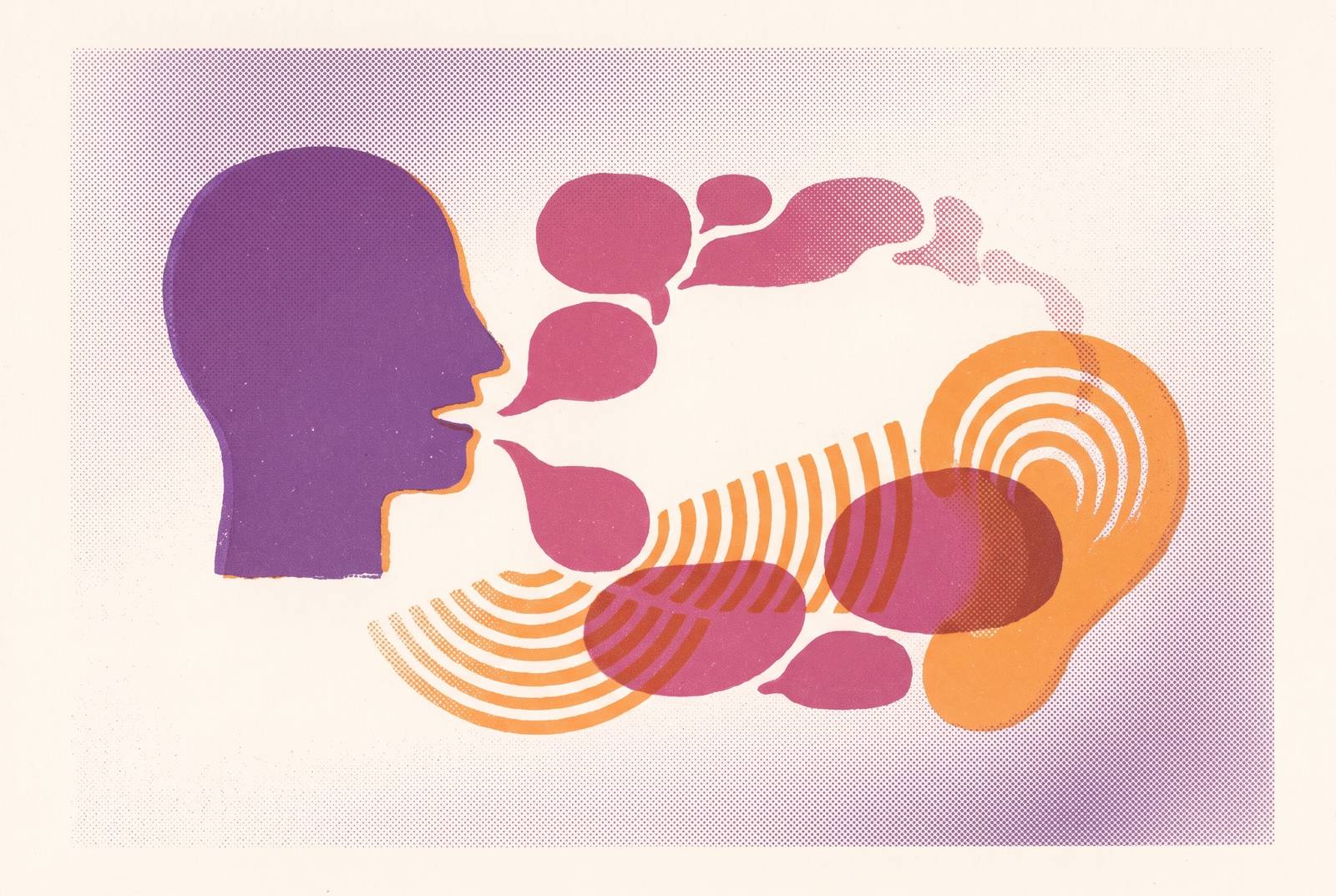
A conversational voice journaling app with AI prompts should do more than transcribe speech. It should ask follow-up questions, reflect your language back in light of what you said, and link themes that come up across sessions. Dictating your feelings merely preserves your words, while being heard by a system that responds helps you organize them into a new understanding. That support can encourage insight, but it cannot guarantee it.
Why recording your thoughts and processing them are two different cognitive acts
Putting a feeling into words makes it something a person can look at more closely. It does not mean that examination has happened. A person can describe a difficult experience in detail, name every emotion it stirred, and still leave the relationship between those emotions unexplored. The account contains what happened and how it felt, but not why one part was especially painful or how it connects to other experiences.
Getting something out can feel like the whole task, particularly when saying it was difficult in the first place. Yet emotional intensity is not the same as cognitive movement. Pennebaker’s findings showed that people who kept venting strong feelings across sessions without building narrative structure had little improvement in health.
Someone must link the events, think through what might have caused them, and find a way to look at the experience. A recording tool leaves that work to the person who made the entry. The person may do it while speaking or afterward, but the recording itself provides no guidance. A transcript can be faithful to every word and still leave the central question untouched.
What the brain is actually doing when expressive writing works
Narrative construction gives emotional material sequence, causation, and meaning. Highly emotional or traumatic memories can be fragmentary and dominated by sensory experience, rather than organized as an account with clear relationships between events. Turning that material into a narrative draws on language and causal reasoning, which are functions linked to the prefrontal cortex. The change is in how the experience is organized and processed. It is not simply a tidier description of the same distress.
The distinction becomes more concrete at the level of words. Pennebaker’s research identified increasing use of causal words, including “because,” “reason,” and “why,” and insight words, including “understand,” “realize,” and “meaning,” as markers that predicted health improvement. Emotional intensity was not the distinguishing signal. Causal language links one part of an experience to another, while insight language shows that the writer is starting to make sense of it. These small words can reveal a large change in what the writer is doing.
Perspective provides another sign of that change. The same research found better results among writers who used a lot of first-person singular language in early sessions and moved toward third-person and first-person plural language in later ones. The shift suggests that writers are moving from being caught up in an experience to being able to look at it from outside. Distance here means finding a vantage point from which the feeling can become something to understand.
Adding “because” to every entry would confuse the marker with the work it marks. A person needs to be making links and finding ways to understand the experience that they had not seen before. This helps explain why a journal can fill up without seeming to go anywhere. More material has been captured, but the activity that reorganizes it has not necessarily occurred.
Why engagement is the variable that controls whether the mechanism fires
Stephanie S. Rude and colleagues studied why expressive writing has different results, looking at emotion-acceptance instructions and how much writers engaged with the task. Their study found that acceptance-enhanced instructions outperformed traditional expressive writing instructions among engaged writers. Those instructions encouraged people to explore and accept their emotional experience. The qualification about engagement is essential to the finding.
That relationship changes how a journaling session should be understood. Instructions are not packaging around an otherwise identical activity, because they help shape the kind of attention a person brings to the material. Reporting an emotion and openly exploring it are different tasks. The first can end as soon as the emotion has been named, while the second leaves room to consider its causes and significance. Acceptance-oriented framing invites that exploration without making the feeling itself something that must first be corrected.
The blank page offers no such direction. A deeply engaged writer may supply it independently, but someone who vents and stops has no built-in reason to move toward narrative construction. Open dictation can bring the same problem to audio. It removes the physical work of typing while leaving the interpretive work untouched. A microphone is not, by itself, a follow-up question.
A tool meant to support processing needs to make expression easy and help people engage with what they say. Making it easy to start an entry can help a person begin, but exploring the experience takes more than getting started. A tool needs to lower the barrier to speaking while preserving reasons to pause and think.
What a system that responds has to do differently from one that records
A recorder captures, timestamps, and stores an entry. Those functions preserve material, but none requires the speaker to consider a cause, revise an interpretation, or adopt another perspective. A responsive system needs to introduce something the entry alone does not provide. Acknowledgment is not enough to establish that difference. A response needs to open a path for more thought as well as confirm that the words arrived.
Prompting is one way to open that path. A question that asks why something happened calls for a causal account, while one that asks what an experience means invites interpretation. Instead of continuing the report, the speaker has an opportunity to examine a relationship within it. The purpose is not to generate more speech for its own sake, but to give that speech a different job.
Continuity makes another kind of examination possible. A system limited to the current entry cannot detect that the same conflict has appeared three times in two weeks. A system able to reflect that recurrence can bring the pattern into the conversation. Recognizing recurrence makes a pattern-level question possible.
Mirroring language back can also create distance from the raw experience. Hearing an account reorganized offers the speaker an opportunity to consider it as an account. Prompts introduce a deliberate pause into a medium designed for fluency, much as handwriting imposes a slower physical pace. That pause is useful only if it invites thought.
How does a conversational voice journaling app with AI prompts guide your thoughts?
Speaking offers a legitimate entry point for people who think better out loud or abandon written journaling because of blank-page paralysis. For those people, voice offers the practical advantage of lowering the barrier to beginning. The case for conversational voice journaling depends on what happens after speech starts.
A causal prompt asks why the speaker thinks something happened, while a perspective-shift prompt asks what they would tell a friend in the same situation. These questions invite the speaker to move from describing an experience toward explaining it or viewing it from outside.
A follow-up becomes more useful when it responds to what was actually said. When the system reflects the speaker’s language and then asks a relevant question, the speaker hears their account reorganized before continuing. With context from past sessions, that exchange can move from one event to a theme that keeps coming up. Open dictation, by contrast, leaves the choice of whether to make those connections entirely with the speaker.
The evidence described here concerns expressive writing. The framework gives a reason to design voice sessions around engagement and narrative construction, but it does not establish that any particular app succeeds. A prompt-guided voice session is not a therapist. Nor can it guarantee that a speaker will engage deeply, develop a narrative, or reach a new understanding. The defensible claim is that responsive conversation can make those conditions more likely than capture alone.
What to look for in any journaling practice or tool that claims to do more than store your words
The three things to look for are engagement, continuity, and a move toward causal or interpretive language. They apply whether the response comes from a human reader, a structured prompt system, or conversational AI. No particular interface settles the question in advance. A tool’s claim to be conversational needs to be judged by what its conversation helps the user do.
An opening that invites emotional exploration and acceptance asks something different from an interface that simply starts a timer. Warm wording alone is not the criterion. The framing needs to help the person stay with the experience long enough to think it through, going beyond a record that it happened.
The next question concerns continuity and perspective. A tool that claims to recognize patterns needs relevant context beyond the current entry, or it cannot distinguish recurrence from a single event. Its response also needs to make that context useful for thought. Showing an earlier entry by itself does not explain how the entries connect. The reader can check whether the exchange asks them to think about a theme that keeps coming up or helps them see the current account from another perspective.
Entries should develop in meaning as they grow in volume. Causal explanations, emerging interpretations, and changes in perspective offer more useful signs than emotional intensity alone. If each session remains high in feeling but low in structure, the practice may still be functioning mainly as a container. These are criteria the reader can apply without accepting a product’s promise of insight.