Prompt-Guided Disclosure Versus Free Expression Outcomes
Prompts deepen reflection but free writing unlocks creativity.
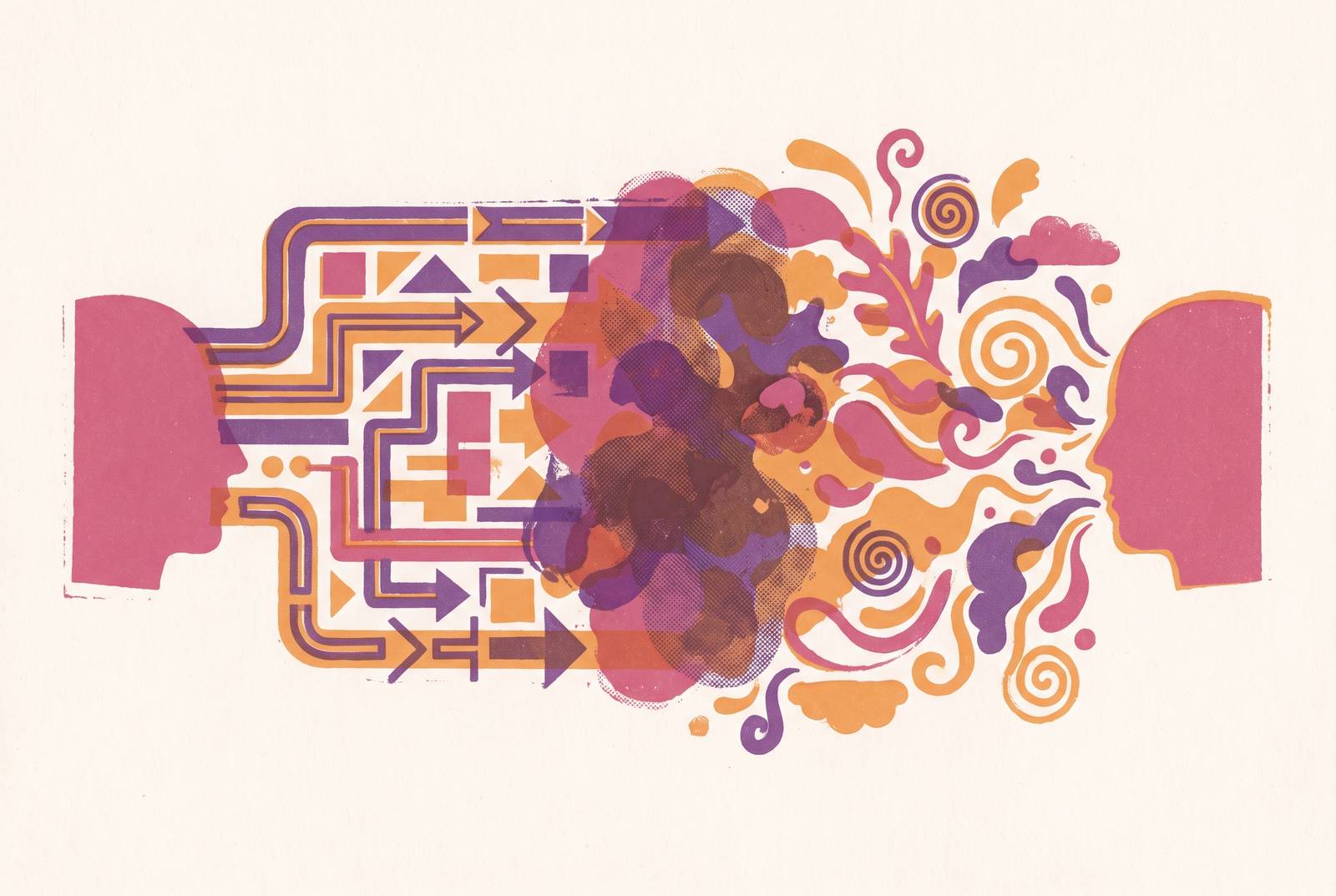
Prompted journaling and free-form writing are not two competing philosophies fighting for the title of "correct way to keep a journal https://blog.mylifenote.ai/morning-pages/." Structure and freedom trade off along different yield curves entirely: one reduces the friction that keeps people from starting, and sharpens emotional processing toward a specific target, while the other opens up associative thinking that a well-designed prompt can accidentally choke off.
That reframes the whole debate. The real question isn't "which format is better," it's "what does each format actually produce, and under what conditions does that production matter." A blank page doesn't make someone more honest. It just makes different things possible, and forecloses others.
A misconception shows up constantly in journaling advice: the idea that blank-page freedom is somehow more "authentic," and that prompts are training wheels people graduate out of once they get good at this. That framing doesn't hold up against what the research actually shows. Structure isn't a crutch for beginners. It is a mechanism with its own specific outputs, ones that free writing doesn't reliably produce, no matter how experienced the writer.
Picture the two entry points side by side https://blog.mylifenote.ai/morning-pages/. The cognitive work is already halfway done before the pen touches paper. Someone else opens a blank notebook page and confronts, well, nothing. No scaffolding, no direction, just the low hum of "what do I even write about." Both people are journaling. They are doing functionally different things with functionally different brains in that moment, and the rest of this piece is about pulling that difference apart.
The brain during emotional writing
Both formats share the same underlying mechanism before they diverge: writing takes thought out of the raw, reactive part of the brain and moves it toward the region that can organize and regulate it. Matthew Lieberman's affect labeling research found that naming an emotion in words, actually writing "anxious" instead of just feeling anxious, reduces amygdala activation and increases activity in the prefrontal cortex. That is the neurological version of moving from reacting to reflecting, and it happens whether the writing came from a prompt or from nothing.
The idea is that a feeling stays overwhelming as long as it stays inside someone's head, tangled up with their sense of self. Write it down, though, and it becomes an object on a page, something a person can look at, turn over, and examine instead of being consumed by it. That's not a small trick. It's the difference between "I am anxious" and "there is anxiety, written in ink, sitting on this page, and I am the one looking at it."
None of that depends on whether a prompt exists. What a prompt changes is what happens next, and that's where the two formats stop looking like variations on the same activity https://blog.mylifenote.ai/morning-pages/.
How structure lowers the entry barrier
Here's the scaffolding effect in plain terms: a prompt takes the executive function that would otherwise spend itself on "what do I write about" and redirects that same mental energy toward actual reflection. That's not a minor convenience. It's a reallocation of a limited resource, and for a lot of people, that resource was the entire bottleneck standing between them and ever writing a second sentence.
This matters most for anxiety, and here's why. A contained prompt, something like "what evidence actually supports this thought," interrupts a rumination loop instead of letting it sprawl outward the way blank pages tend to invite. Anxious thought spirals feed on open space. A boundary gives the spiral somewhere to stop.
That's the kind of number that makes a person ask what, exactly, was doing the work, and the answer isn't "writing helps," because plenty of unstructured writing exists and doesn't produce numbers like that. The answer is the structure itself.
And the structure here was specific. When people wrote without that structure, without the emotion-and-thought focus, the effects came in weaker. Pennebaker and Chung's later work backs this up from the other direction too: writing about pure facts, no emotional content, produced no improvement at all https://blog.mylifenote.ai/pennebaker-writing-protocol/. The structure wasn't decoration around the writing. The structure was the active ingredient. Pennebaker and Beall found that among 46 students, structured expressive writing reduced health center visits by 50% over 6 months, a result published in the Journal of Abnormal Psychology that serves as the anchor finding for interrogating why structure was the decisive variable.
The ceiling on structured expression
But structure has a ceiling, visible right where the previous section's success story would predict it wouldn't. A 2025 preprint on arXiv compared structured and free-form journaling conditions directly and found a split that cuts against the simple "structure wins" reading: structured prompts produced deeper metacognitive reasoning, more sustained unpacking of a situation within a single session, but free-form journaling produced more frequent emotional expression and appeared to support emotional attunement better. Depth versus frequency. Neither one subsumes the other.
Why would a prompt ever work against someone? Think about what a prompt actually does mechanically: it points attention at a defined patch of territory. Anything associative that drifts outside that patch either gets redirected back toward the prompt or gets quietly dropped. That's the containment mechanism working exactly as designed, and it's also the cost of the containment. A tightly worded prompt buys focus by selling off whatever tangent might have wandered into more useful territory on its own.
Julia Cameron's morning pages, from The Artist's Way, are at the opposite end of this on purpose. Cameron didn't design that as a lazy alternative to structure. She designed it specifically to route around the internal editor and reach the associative layer that produces it, the part of the mind that a well-formed prompt, ironically, tends to keep at arm's length.
That leads to a conclusion supported across enough of the literature to count as consensus: heavy reliance on prompts can cap the creative and associative insight available to someone who already has an established writing habit. The scaffolding that got a beginner off the blank page becomes, for a practiced journaler, the exact thing keeping them from going further.
The spectrum between full structure and full freedom, and what lives in the middle
Lining the formats up by degree of structure rather than by quality reveals a spectrum with a lot more nuance than "structured or free."
At the rigid end sit CBT thought records: multi-step exercises, built by psychologists, for identifying and dismantling specific cognitive distortions. Just below that in intensity but not in brevity is the 5-Minute Journal format: mornings covering three gratitudes, three things that would make the day great, and one affirmation, evenings covering three highlights and one thing to improve. It's built for busy people and beginners chasing a habit, not depth.
AI-guided journaling is a notch looser, structured but personalized: it generates prompts from a person's own prior entries and can surface patterns across sessions that the writer might never notice on their own. That adaptiveness is the whole point, it's structure that reshapes itself instead of staying fixed. Gratitude journaling sits further toward the open end still, moderate structure that gives a direction without narrowing into a single path, and it's been linked to improved mood, sleep, and optimism over 10 weeks.
There's a format that doesn't fit neatly on the ladder: prompt-as-trailhead writing, where a prompt kicks the session off, steers it away from surface-level small talk with the self, and then simply gets out of the way once the writer has found the emotional territory worth being in. It's distinct from the CBT record because nothing scripts what happens after the opening line, and distinct from a blank page because the writer isn't left alone at the start when starting is hardest.
At the far end sits morning pages again: three longhand pages, no topic, no goal beyond filling the three pages. Pure output, no destination specified in advance.
Here's what's interesting about where the strongest clinical evidence actually clusters: not at either extreme, but in the middle. That specific placement is itself an argument. The middle of the spectrum, not either edge, is where the most reliable therapeutic outcomes have been documented so far. The Pennebaker protocol sits between CBT rigor and open free-writing (15–20 minutes, focused on emotion and fact, repeated over 3–4 days), and this specificity is itself an argument that the middle of the spectrum is where the strongest therapeutic evidence lives.
Choosing the right format for the journal session's purpose
The format should follow the goal of the session, not just whatever a person's temperament happens to prefer, though temperament decides what a person can actually sustain over time. Those are two different questions, and conflating them is how people end up quitting a format that was, on paper, exactly right for what they were trying to do https://blog.mylifenote.ai/morning-pages/.
Mapped against the research, the goals line up with formats fairly cleanly. Processing one specific, difficult emotion or event calls for the structured expressive writing of the Pennebaker protocol, where containment isn't a limitation, it's the feature doing the work. Breaking an anxiety loop or challenging a cognitive distortion calls for a CBT thought record, because the structure there is therapeutic by design, not by accident. Clarifying and actually hitting a goal calls for writing it down in a structured way. Dr. Gail Matthews' research out of Dominican University found that people who wrote their goals down in a structured format achieved them at a rate 42% higher than people who only thought about those same goals https://blog.mylifenote.ai/guided-journaling/ https://blog.mylifenote.ai/daily-journal-prompts/. That's a big enough gap to make the format choice, not just the intention, the deciding variable.
Creative and associative exploration wants the opposite treatment entirely: free-form morning pages or stream-of-consciousness writing, where structure doesn't just fail to help, it actively gets in the way of the associative yield the format exists to produce. And for emotional attunement, actually feeling in tune with what's going on internally, along with sheer frequency of emotional expression, the 2025 arXiv preprint points toward free-form again, over structured prompts.
Personality still matters, just as a secondary variable rather than the deciding one. Introverts tend to do well with structured introspective prompts that give them somewhere specific to look. Extroverts can find a generic, open-ended prompt understimulating, not enough friction to grab onto. That doesn't make one format objectively superior, it just determines which format someone will actually keep doing past week two https://blog.mylifenote.ai/morning-pages/.
A trap undercuts the whole framework if it's missed: a diary that just records what happened during the day, no emotional register, no analysis, produces close to no measurable psychological benefit on its own. The goal has to be specified before any of this format matching means anything. Format without purpose is just handwriting.
Matching format to app: what to look for in a journaling tool based on how you want to write
The same fit logic that applies to choosing a writing format applies just as directly to choosing the app that holds it. The app has to serve the mode, not override it.
On the structured and prompted side of the ledger, a few names stand out for different reasons. Day One has been around since 2011 and carries the kind of track record that earns "gold standard" as a fair label, over 150,000 five-star reviews and an Apple App of the Year credit, with templates, streaks, and auto-tagging all working to cut down friction. Its 2025 Windows launch finally brought it to every major platform, though the Android and Windows builds still trail the iOS version. The Android app specifically is missing video entries, voice notes, handwritten drawings, and a proper home-screen quick-entry widget, it only offers a basic streaks display, and there's still no Wear OS companion even though Apple Watch support has existed for years.
On the flexible, life-logging end of things, Journey is a solid pick specifically for Android users. Diarium goes further into automatic context-gathering: it pulls feeds in from Facebook, Untappd, Trakt, Last.fm, and Strava, along with calendar appointments and the day's weather, all without the writer having to type any of it. Pricing runs $19.99 on Windows, while Android, iOS, and macOS are free with an optional one-time $14.99 Pro upgrade, no subscription attached to any of it. Diarly, for anyone living inside the Apple ecosystem, keeps entries local-first, staying on-device unless iCloud sync gets switched on deliberately, with a free tier generous enough that it's been described as roughly what Apple's own Journal app might look like several years further into its development.
One more format deserves its own mention here, because it doesn't fit neatly into either the structured or free-form bucket: voice. Some people simply think better out loud than they do on a page, and speaking a feeling into existence is a different cognitive act than writing it down. Conversational, prompt-guided voice journaling solves the difficulty of facing a blank page and a blank cursor at the same moment, which is a distinct enough mechanism that it deserves to be treated as its own format with its own yield curve, not filed away as a convenience feature bolted onto writing. The format-fit principle applies to apps as well: a tool should match the mode, since a highly structured CBT-style app is not the right choice for someone doing morning pages, and the wrong fit undermines the format's mechanism. Mindsera offers 50+ structured writing frameworks based on mental models such as First Principles Thinking, Regret Minimization, and Ikigai, with AI that generates personalized prompts and analyzes personality via the Big Five model, bridging structured and adaptive prompted journaling. Reflection ships a real Android app rather than a wrapper, offers one of the most usable free tiers on Android, and features AI prompts as a core capability.
A practical decision map for choosing between structured and free-form writing in any given session
None of this is a permanent commitment made once and left alone. Formats can, and probably should, shift session by session depending on what that particular sitting is actually for. The same person might reach for a CBT thought record on a morning when anxiety is loud, and pick up morning pages that same evening when the goal has shifted to something closer to creative wandering.
What is this specific session actually for, emotional processing, habit building, creative exploration, goal clarification, or interrupting an anxiety loop, since three questions determine format. Where does the practice currently stand, a beginner benefits from prompts carrying more of the weight, while someone with an established habit can afford to go further into free-form territory without losing the thread. And what does the tool in hand actually support, paper or app, voice or text, connected or offline, since the tool needs to serve the format rather than quietly override it.
The habit-formation math changes the calculus early on. New habits take an average of 66 days to actually form https://blog.mylifenote.ai/daily-journal-prompts/ https://blog.mylifenote.ai/journaling-ideas/. A 30-day challenge, the kind most journaling apps love to build a badge around, gets a person maybe halfway there, a solid foundation, not yet an automatic behavior. That's not an argument that free-form writing is somehow inferior during this window. It's an argument that consistency is the variable doing the heavy lifting early on, and structured prompts are simply better built for keeping someone showing up than an open page is, at least until the habit has enough weight behind it to hold its own shape.
Which is the point the whole piece has been circling. Knowing what each format actually produces, metacognitive depth and targeted emotional processing on one side, associative reach and emotional attunement on the other, turns the choice of format from a coin flip into a decision made on purpose. The journaler who understands that distinction isn't picking a side in a debate. They're just reaching for whichever tool actually does the job in front of them. Structured expressive writing reduced health center visits by 50% over 6 months, according to Pennebaker & Beall in the Journal of Abnormal Psychology https://blog.mylifenote.ai/guided-journaling/. Writing down goals with structured prompts increased achievement rate by 42%, Matthews at Dominican University found https://blog.mylifenote.ai/guided-journal/. Written goals were more likely to be achieved compared to unwritten goals, by 42%, according to Dr. Gail Matthews https://blog.mylifenote.ai/journaling-ideas/. A meta-analysis examining health outcomes from journaling, conducted by Mogk et al., included 30 randomized trials https://blog.mylifenote.ai/journaling-ideas/. The therapeutic writing protocol about an emotional experience, developed by James Pennebaker, calls for a duration of 15 to 20 minutes https://www.mindfulsuite.com/reviews/best-guided-journaling-apps.
Sources
- Guided Journal: What It Is, Types & How to Start (2026)
- Daily Journal Prompts: 30-Day Challenge + Free Prompts (2026)
- Guided Journal: What It Is, Types & How to Start (2026)
- 100+ Journaling Ideas: Creative Prompts for Every Mood (2026)
- Your Creative Self-Expression: Free Writing vs Structured Journal Writing
- Faithful Where It Can Be Checked: Auditing a Reflection Agent Against Its System Prompt in a Randomized Trial
- The Ultimate Guide to the Best Guided Journaling Apps for Self-Reflection in 2026
- 100+ Journaling Ideas: Creative Prompts for Every Mood (2026)