Neuroplasticity Claims in Self-Help Literature Versus Neuroscience
The neuroscience of brain change is far more limited than self-help authors claim.
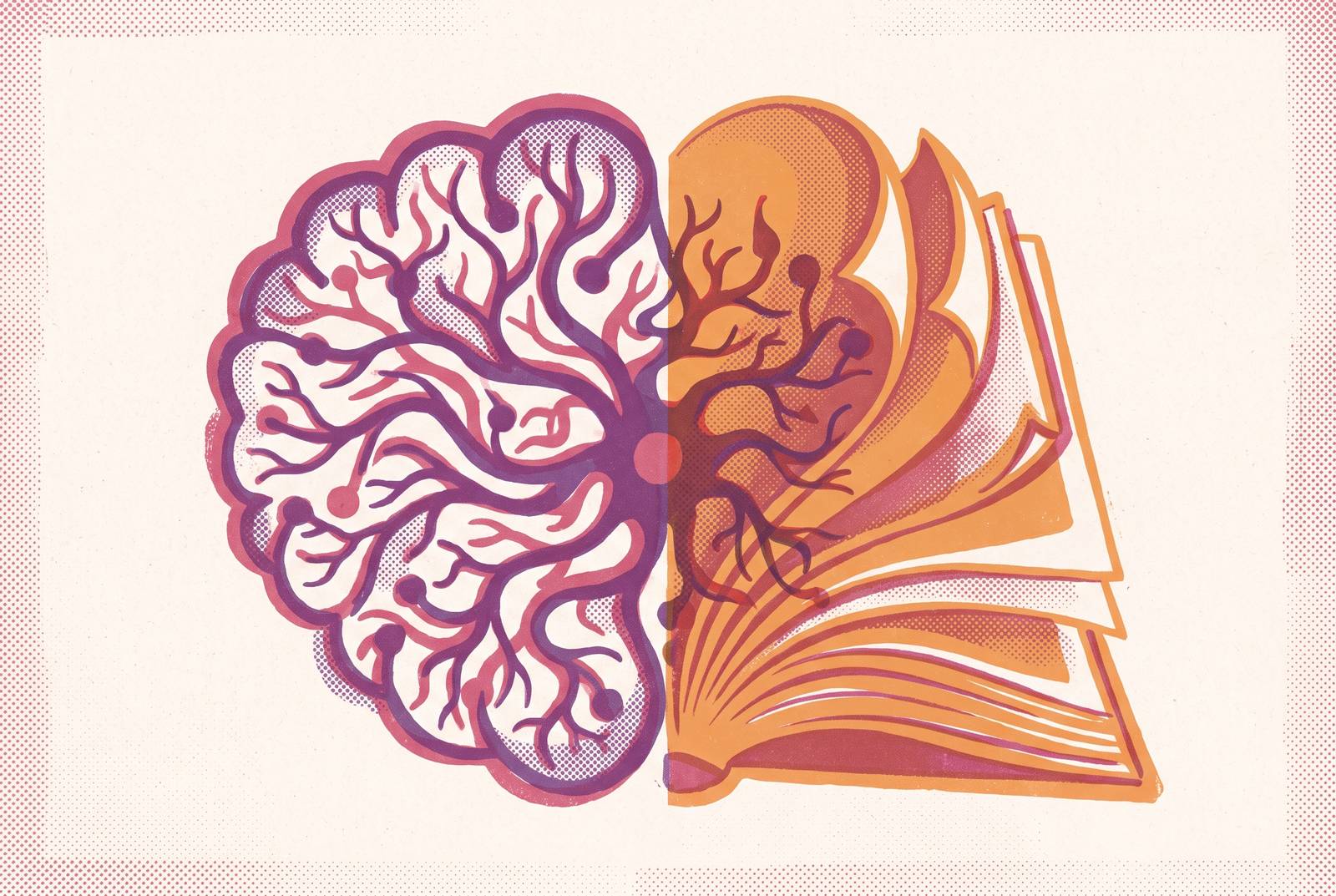
Neuroplasticity is well-documented, and nowhere near as obedient as the self-help shelf makes it sound. This piece traces where the actual neuroscience ends and the marketing promise begins, and tries to leave readers with a clearer line between the two.
How neuroscience got the adult brain wrong for a century, and then corrected itself
In 1906, Santiago Ramón y Cajal won a major scientific prize for work that, among other things, helped cement one of neuroscience's longest-running mistakes. Cajal declared that adult nerve paths were "fixed, ended, immutable," and that verdict became neurology's working assumption for most of the following century. Medical schools taught it as fact. Clinicians treating stroke victims and brain-damaged patients built their expectations around it, operating on the premise that whatever circuitry survived the injury was the circuitry the patient would live with for good.
That premise turned out to be wrong, though it took decades for the field to admit it. Research starting in the 1960s began chipping away at Cajal's claim, showing that synaptic connections strengthen or weaken depending on how often they're activated, that dendritic structures can expand or contract over an adult lifetime, and that in certain regions, the hippocampus especially, new neurons form well past childhood. Wide acceptance didn't arrive until the 1990s. An entire generation of doctors trained under a model their own field would eventually discard.
The correction wasn't a footnote. It changed how neurologists think about recovery from stroke, how addiction gets treated, how depression gets approached, and how any number of brain injuries get managed, because a brain that can reorganize itself opens treatment possibilities that a "fixed, ended, immutable" brain never could. That's the real foundation under the word "neuroplasticity," built on seventy years of contested, slow-moving, occasionally reversed science. It's also the foundation self-help writers would later help themselves to, keeping the headline and discarding most of the fine print. Before getting to what they did with it, the fine print deserves a look on its own terms.
What "neuroplasticity" describes at the cellular level and what it leaves out
Picture the brain rewiring itself and you probably picture something like an electrician rerouting cable through a wall. That image is almost entirely wrong, and the gap between the image and the biology is where a lot of the popular confusion starts. New neurons do appear in adulthood, but only in specific regions, and they're a smaller part of the story than the phrase "growing new brain cells" suggests.
"Rewiring" is a term borrowed from electrical engineering and dropped into biology, where it doesn't quite fit, and "neurons that fire together, wire together" is a slogan built for a bumper sticker, not a lab notebook. Even whether adults really do generate meaningful numbers of new neurons remains unsettled among the people who study it for a living. If the experts can't agree on whether new neurons are showing up in appreciable numbers, it's worth some caution before a paperback promises your brain will grow a new, improved you by next Tuesday.
A 2025 review in Brain Research lays out four distinct neuroplastic mechanisms, and each one can swing adaptive or maladaptive depending on context, a level of nuance that almost never survives the trip from journal to bookstore. Plasticity also isn't a solo act performed by neurons alone. And here's the detail that popular treatments tend to skip past entirely: the mechanism itself doesn't care what it's reinforcing. A brain that strengthens a connection because you practiced piano will strengthen a connection because you doomscrolled for three hours just as readily. Repetition is the only thing it responds to, not virtue.
How the self-help genre extracted an encouraging story from a neutral mechanism
Self-help authors didn't invent neuroplasticity. What they did was take a neutral, bidirectional, slow, and condition-dependent biological process and keep only the detail that sounds like good news. The genre's central pitch, repeated across dozens of titles, goes roughly like this: repeat a positive behavior often enough and your brain will "rewire" itself toward improvement, as if plasticity only ever runs in one direction, toward self-betterment, given enough motivational effort.
Some of this has a name and a publication date attached. Hardwiring Happiness, by Rick Hanson, was published in 2013. Both get cited as examples of work that stretches plasticity science well past what laboratory findings actually support. The Brain That Changes Itself, by Norman Doidge, has drawn its own share of scientific criticism for leaning on individual case studies and treating them as evidence for mechanisms that apply broadly, a move that works better as storytelling than as science.
Even people with real neuroscience credentials have made the jump. Michael Merzenich, a respected neuroscientist, pitched a subscription-based brain training program he claimed could "rejuvenate, remodel, and reshape your brain at any age." That's a researcher's name attached to a consumer pitch, a distance between those two roles. When a scientist becomes a vendor, the marketing has a way of getting ahead of the data, and nobody is immune to that pull, credentials included.
The word "rewiring" is doing three jobs at once in most of this literature, and only one of them is honest. It asserts that change is possible, which is true. And it suggests the change produced will be the change requested, which is uncertain at best. The self-help version only ever talks about the mechanism when it's working in your favor.
Three limits the popular framing erases: age, attention, and adversity
The popular pitch treats neuroplasticity as if it's available equally to everyone, triggered automatically regardless of attention, and reliably beneficial once triggered. Research contradicts all three assumptions, and each one deserves its own look.
Start with age. Adult plasticity operates under tougher terms than childhood plasticity, demanding more deliberate effort and more time to produce a fraction of the change a child's brain manages almost without trying. Learning a language at six and learning one at thirty-six are not the same undertaking dressed up in different clothes, and treating adult plasticity as functionally interchangeable with a child's ignores exactly the research that demonstrates the gap. By the mid-twenties, the brain has reached its peak neuron count. Windows of plasticity open and close according to genetic timing and environmental experience, a developmental constraint that the adult-empowerment pitch tends to skip over completely, presumably because "your window may have already closed" doesn't move many copies.
Then there's attention. Passive exposure barely moves the needle. What actually drives plasticity is repetition combined with focused attention, real challenge, and the correction of errors along the way. Difficulty is closer to the engine driving plasticity than a tax paid on the way to it. A 2025 narrative review of physical and emotional interventions confirms that both adaptive and maladaptive outcomes appear in this research, and which one you get depends heavily on the nature and context of the intervention, not just on how many times you repeated it.
And adversity rounds out the three. The same review makes clear that plasticity is a mechanism that responds to whatever keeps happening, good or bad. Chronic stress, trauma, and repeated negative patterns can shape the brain just as durably as any self-improvement regimen can, sometimes more so. None of this makes plasticity less real. It makes the uniformly upbeat version of it considerably less honest.
Why individual-level rewiring claims cannot be verified
Beyond the oversimplified biology sits a sharper problem: the core claims sold under the neuroplasticity banner can't be confirmed at the individual level, because the kind of proof being implied isn't available by the nature of the claim itself. Saying "this habit rewired my brain" attributes a specific outcome to a specific group of neurons in a specific person's head, and no current method traces that line with any precision.
Verifying it properly would call for fMRI scans taken before and after an intervention, read by someone qualified to tell neural reorganization apart from noise, with every other variable in a person's life held constant for the duration. Even clearing that bar wouldn't settle causality cleanly, since isolating one intervention's effect from everything else happening in a person's brain and life is a problem most neuroimaging studies haven't solved. Studies in this space are often built on small sample sizes, lack control groups, show negligible effect sizes, struggle to replicate, and that caveat is close to the center of the field rather than a minor one sitting at its edge.
"Neuroplasticity," used the way most consumer products use it, functions like a promissory note. The true part, that the brain can change, gets quietly extended into two much shakier claims: that this particular intervention causes this particular change, and that the change produced matches the one you were hoping for. Applying real scrutiny to the different types of plasticity being invoked reveals a pattern: scientific vocabulary gets borrowed to dress up claims that have no scientific backing behind them.
The strongest pushback here points to group-level research: meditation studies, exercise studies, therapy studies that do show measurable brain changes across study populations. That pushback is fair, and it matters for the section that follows. But a population-level average effect measured inside a controlled trial is a different kind of claim than a promise made to one person about one program. The distance between "this intervention produced a measurable group-average change in a clinical trial" and "this app will rewire your brain" is exactly the distance where the overreach lives, and it's worth keeping that distance in view while looking at what the evidence actually does support.
What the science of writing and expressive practice establishes
Expressive writing holds up to scrutiny in a way broad "rewire your brain" claims mostly don't, provided the specific mechanisms, their conditions, and the limits of the evidence stay in focus rather than getting rounded up into a slogan.
Start with affect labeling. Putting an emotion into words triggers something specific and measurable in the brain. Matthew Lieberman's fMRI studies at UCLA have shown repeatedly that naming an emotion reduces activity in the amygdala, the brain's alarm system, while increasing activity in the right ventrolateral prefrontal cortex, a region tied to inhibitory control and the linguistic processing of emotion. That's a documented, replicated effect.
Then there's cognitive offloading. An unresolved worry or an unfinished task tends to occupy working memory the way an open browser tab eats up RAM. Writing with structure produces lasting benefit in a way that the act of writing alone does not. Venting without any structure doesn't produce lasting benefit. Research into expressive writing backs this distinction directly: unstructured venting didn't produce the same results as structured expressive writing in controlled studies. More writing isn't automatically better, either. Past a certain point, dwelling on negative feelings in writing can feed rumination instead of resolving it, and that same body of research found that expressive writing can make people feel worse immediately after a session, particularly when the material involves serious trauma, even when those same people report feeling better weeks later.
The clinical end of this evidence is the sturdiest part. A systematic review covering studies from 1991 to 2024 found that writing-based therapies, including journaling, poetry, Chinese calligraphy, and memory notebooks, serve as effective tools for cognitive, emotional, and social rehabilitation in people with mild cognitive impairment and dementia. That's measured outcomes under applied controls, which puts it on firmer ground than almost anything discussed in the sections above.
The medium may matter depending on the goal. Digital formats seem to work well for structured exercises like cognitive reframing, where the task is analyzing a thought rather than sitting inside a raw feeling. The same 2025 narrative review cited earlier confirms that both physical and emotional interventions produce real neuroplastic modulation, and that whether the result is adaptive or not depends on the nature and context of the intervention, the same qualifier that's shown up throughout this piece because the research keeps insisting on it.
How voice-based and conversational journaling fits the evidence
The mechanisms the research actually backs, structured linguistic processing of emotion, cognitive offloading, and repeated reflective practice, don't require a pen or a keyboard specifically. They require turning experience into language with enough structure to move past simple venting, and talking satisfies that requirement as well as typing does.
Speaking through a structured prompt gives the same affect-labeling process a route into language, since naming an emotion engages the amygdala and the right ventrolateral prefrontal cortex whether the words get typed, written by hand, or said out loud. For someone who finds a blank page intimidating, or who simply doesn't have the time to sit and type at length, talking lowers the barrier to the exact linguistic processing the Lieberman research documents.
Joice is built around that idea: a voice-based, conversational journaling app that replaces the blank page with a structured back-and-forth, designed to get someone from raw feeling to organized language using only their voice. Set against the other ways people try to build a reflective habit, whether that's an unguided notebook, a plain voice memo app, or a generic note-taking tool repurposed for the job, the appeal of a structure built around prompts and follow-up is that it pushes toward the organized, worked-through language the research identifies as the active ingredient, rather than toward unstructured venting, which the same research shows doesn't produce lasting benefit. None of this amounts to a brain-rewiring guarantee, and nothing in the evidence above would support one. What it amounts to is a format matched to a mechanism that the research can actually back: naming a feeling, giving it structure, and letting a well-documented, modest, and real effect do the work it's shown to do.
Sources
- The neuroplastic brain: current breakthroughs and emerging frontiers - ScienceDirect
- Physical and Emotional Interventions in Modulating Neuroplasticity: A Narrative Review of Recent Evidence
- Writing as cognitive rehabilitation in MCI and dementia: a systematic review of therapeutic benefits and applications