Why Most People Fail to Sustain Journaling and What Prompts Actually Fix
Specific prompts remove the decision work that stops most people from journaling consistently.
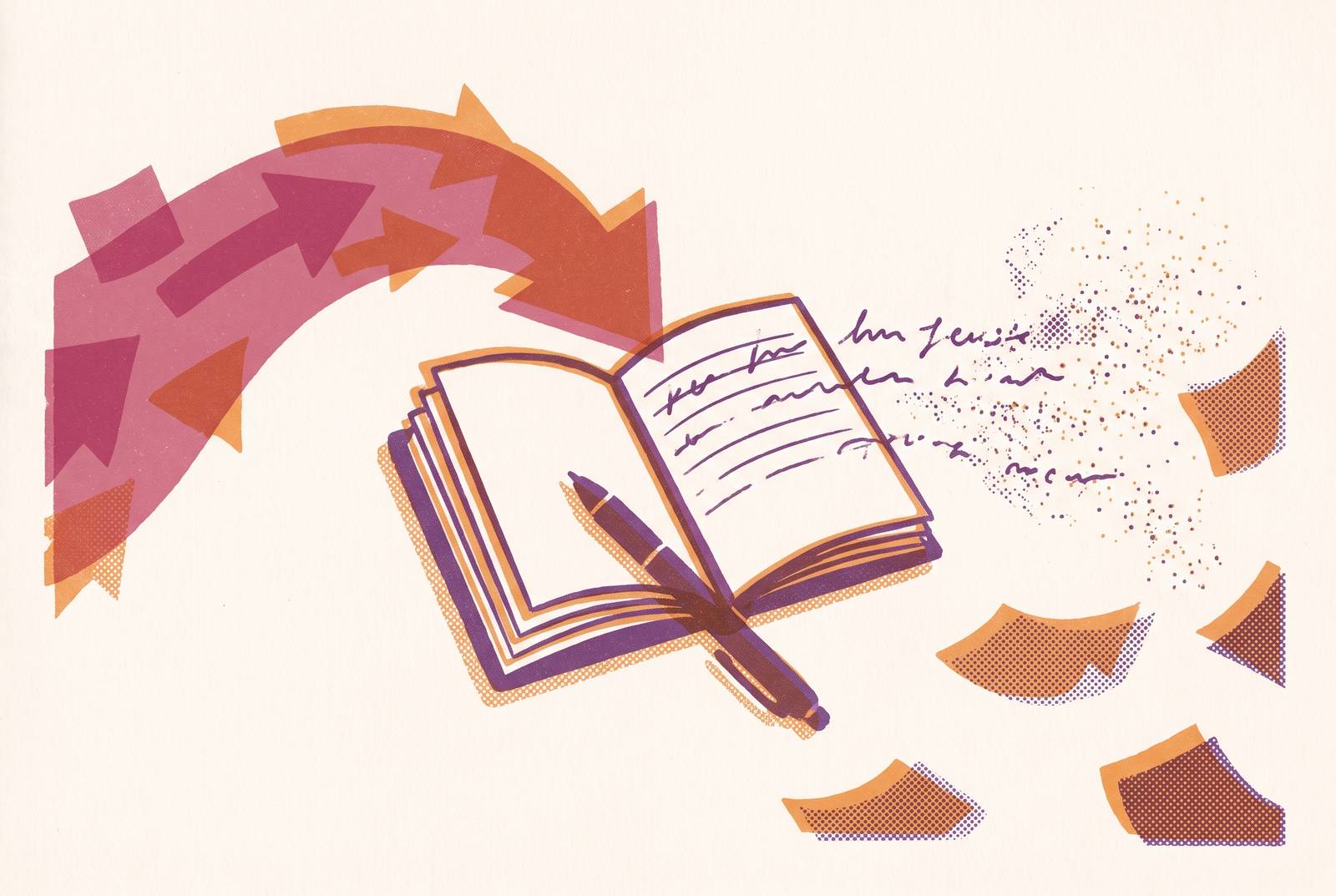
Journaling often fails at the point of entry. The format asks a tired person to choose what to write about, work out what it means and write something worth keeping before they can begin to reflect. Prompts give the writer a place to start, so they can reach the useful work of journaling without having to be more disciplined.
Why journaling habits collapse before they become automatic
A half-filled notebook can feel like evidence against its owner. The first entries show that the writer meant well, while the empty pages seem to show that they failed to keep going. Yet the notebook often asks too much of the writer each time they sit down. Before writing anything, the writer must decide what matters, where to begin and whether the effort is worthwhile. That is a recurring decision cost.
Perfectionism adds another toll at the entrance. An entry must be insightful, the prose must be worthy and the notebook must stay current. Once those expectations take hold, a plain account of an ordinary day feels like too little. Missing a session then creates the catch-up trap, in which unwritten days become a debt that must be repaid before the present can receive attention. The journal quietly becomes another thing the writer is behind on.
Timing makes these demands harder to meet. Scheduling journaling for the end of the day puts it in competition with depleted willpower, just when beginning is hardest. University College London’s habit formation research tracked people building a new daily habit and found that automaticity took far longer than the popular “21-day” claim suggests. That myth encourages beginners to judge themselves before the habit has had time to form. The belief that journaling must be daily, beautiful, deep and transformative compounds the mistake by treating normal variation as personal failure.
What the brain is actually doing when journaling works
The effort is worth understanding because useful journaling does more than preserve a record. It recruits cognitive processes that turn emotional experience into something more ordered and manageable. One of those processes is affect labeling. It involves naming an emotion in words. Matthew Lieberman’s fMRI research at UCLA documented reduced amygdala reactivity and increased right ventrolateral prefrontal cortex activation when people labeled emotions. The brain’s emotional alarm grows quieter as words help give the feeling a clear shape.
But naming is not the same as repeatedly declaring how bad something feels. James Pennebaker at the University of Texas at Austin has spent decades studying expressive writing, and the benefits are tied to narrative construction more than to venting alone. People who wrote “I'M SO ANGRY” repeatedly showed no benefit, while people who organized their experience into a coherent account did. Journaling can help with anxiety because a story places relationships between events and feelings where there was previously an unresolved tangle.
That structure also matters for mental noise. The default mode network, or DMN, is active during self-referential thought, mind-wandering and internally directed cognition when there is no specific outside task to do. Journaling gives that inward attention a task to work on. The useful movement is therefore not simply from silence to words, but from unbounded thought to organized experience. This makes the format consequential, because a journal can only support these processes if the writer gets far enough to begin them.
Why the blank page defeats the very cognitive process journaling is supposed to trigger
The blank page puts a preliminary task in front of the useful one. Affect labeling, narrative construction and cognitive offloading all need the writer to put what they have experienced into words. Yet an empty page first demands that the writer invent a starting point, consuming the working memory the writing is supposed to free. Perfectionism raises the barrier further by making the entry justify itself before it exists.
A mismatch between format and purpose can stop the process just as effectively. An analytical writer may struggle with pure free-writing, while a feeling-oriented writer may find a structured template constraining. Zhong et al.’s gratitude practice study found that people’s appraisal of their situation shaped whether gratitude felt appropriate, with competing demands or emotional unreadiness contributing to lapses. More broadly, a format can ask for the wrong kind of thought at the wrong moment. The structural solution is a prompt that removes the preliminary decision without prescribing the answer.
How prompts work as a structural fix, not a creative aid
A useful prompt supplies a concrete anchor that activates a memory or emotion already available to the writer. Once that anchor is active, narrative construction can begin without a separate search for a subject. This is why “What are you grateful for?” can produce thinner results than “What moment from today do you keep replaying?”. The first asks the writer to search an abstract category, while the second points toward a particular experience. Specificity removes work that would otherwise precede the answer.
A question also changes the nature of the assignment. Answering feels like having a conversation, while writing an entry can feel like having to make a finished piece. The same words may reach the page, but the writer no longer has to decide what kind of entry deserves to exist. Over time, the prompt can also act as a cue in the habit loop, signaling where journaling starts. Its role is less that of a muse than that of a door handle.
Zhong et al.’s study found that participants adapted their activities and rhythms when a gratitude format felt forced, with persistence connected to perceived value and broader life commitments. The starting point must lead toward something the writer actually needs.
The prompt categories that match different journaling goals
Emotional awareness prompts help name and externalize feelings before demanding an explanation. “What am I feeling right now — without explanation?” removes the pressure to justify or analyze the answer, making it easier for someone who tends to avoid emotional writing to begin. A related question, “What did I need today that I didn't ask for?”, helps the writer identify an unmet need in their answer. This category asks for the minimum work needed to begin affect labeling. Its value lies in making a feeling available to thought.
Analytical and narrative-reconstruction prompts serve a different purpose by helping a writer revisit difficult experiences with distance. “What 'alternative ending' or 'next chapter' can I write for this story starting today?” shifts attention toward how the account might develop. “What title would I give this chapter of my life, reflecting the lessons learned?” invites a wider view of the same material. Drawn from narrative therapy, these questions support reframing without requiring the experience to be minimized. The related process of third-person distancing lowers emotional reactivity and helps people think in more adaptive ways without having to use more cognitive control effort.
Values-alignment prompts move from emotional processing to behavioral accountability. “What do I say I value — and what does my calendar actually show?” turns an abstract claim into a comparison with observable behavior. The calendar gives the writer something to audit rather than a feeling to perform. This approach can suit analytical personality types who respond more readily to gaps in logic than to open-ended questions about feelings.
Future-self prompts address motivation and goal clarity. Laura King developed the ‘Best Possible Self’ exercise, which involves writing about a future in which everything has gone as well as it possibly could. The exercise can clarify values, increase motivation and optimism, and improve subjective well-being. Its important condition is an emotionally engaged, vivid account. Specificity is what separates the exercise from wishful thinking.
Somatic and body-based prompts give writers a way to start when they cannot find words for their feelings. “Where in my body do I feel this emotion right now?” grounds the answer in physical sensation. That can help people who struggle to name feelings directly or feel disconnected from emotion. For anxiety and trauma-adjacent journaling, the starting point is what can be sensed.
Idea-generation and pattern-recognition prompts support lighter creative and reflective work. “What pattern am I noticing in my week so far?” and “What recent insight changed how you think?” invite a cognitive audit. For beginners without a defined goal, “The moment I keep replaying from this year is…” provides a particularly accessible memory anchor. It requires no topic generation or emotional vocabulary before the first words arrive. Across these categories, the decisive variable is fit, because a good question for one task can be an unnecessary obstacle to another.
How format and medium shape whether prompts actually work
The same principle extends from the question to the tool that carries it. A suitable prompt still creates friction if answering it requires a medium that does not fit the writer’s circumstances. Paper is slower by design, favors deliberation over optimization and reduces external stimulus. Those qualities can support deep emotional processing, but they make paper less suited to capturing thoughts on the go. Slowness is useful when it serves the task and costly when it obstructs access.
Digital environments make a different tradeoff. Speed and retrieval, including search, on-this-day features and multimedia, are central advantages. For someone whose phone is already with them, an app can remove the physical barrier of reaching a separate notebook. Privacy matters just as much as convenience, because it shapes what the writer feels able to say. An open notebook on a desk may inhibit honesty, while a password-protected app may make more candid writing possible for the same person.
A voice-first tool changes the route again by making the response spoken. Zhong et al.’s study documented adaptations from written to spoken practice and from daily to event-triggered rhythms when the original approach stopped fitting. The practice can still be useful when the medium changes. The relevant comparison is the barrier each medium creates between this writer and an honest answer.
Building a prompt-guided habit that actually reaches automaticity
A matched prompt and medium make starting easier, but repetition still needs a structure that can last beyond initial enthusiasm. Anchor the session to an existing behavior, such as morning coffee, a commute or the end of lunch. The behavior already in place gives the writer an environmental cue, so they have one less thing to remember. This puts the starting signal outside the daily negotiation over whether journaling feels worthwhile. It also means the practice depends less on willpower when the writer is tired.
Next, make one answered prompt enough to count as an entry. The requirement is not a page, a daily log or a complete record, so a two-sentence answer can count as success. That threshold keeps the measure of completion close to the actual purpose of the practice. Naming a feeling or making sense of a difficult moment is still worth doing when it takes only a few words. Length is not the same thing as cognitive work.
Treat missed sessions as something to learn from without blame or a growing sense of debt. Zhong et al.’s Adaptive Gratitude Practice Model describes lapses under competing demands or emotional unreadiness, followed by a return when gratitude again felt useful. That account supports a view of sustained practice as interrupted activity with deliberate re-entry. There is no need to make the next session carry every session that did not happen.
The prompt can evolve too. A concrete memory anchor that helps at the beginning may give way to analytical or future-self questions six months in, without restarting the habit from zero. What matters is continued access to the emotional payoff, including less mental noise and a more coherent account of experience. The habit is the infrastructure and the prompt is the door. The writer does not need a perfect system, only one with a threshold low enough to walk through.