Expressive Writing as a Rumination Interruption Tool
Naming emotions on paper quiets your brain's alarm system and breaks repetitive thought cycles.
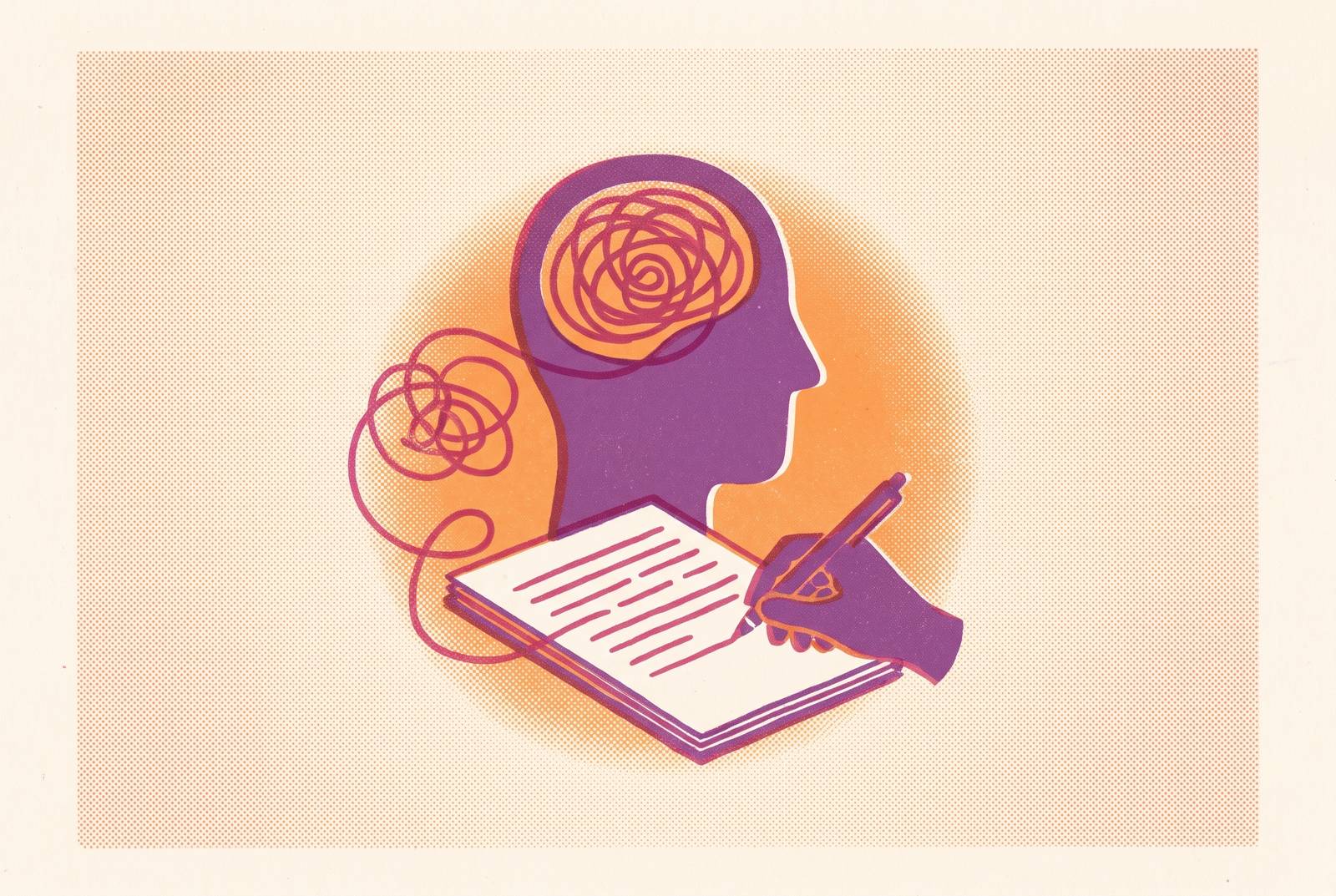
Expressive writing can break into rumination by putting difficult thoughts into words. For people who freeze at a blank page, voice journaling offers a way to talk through anxious thoughts without typing. Whether on paper, in an app, or through voice, the practice should help name emotions and turn thoughts that keep repeating into an account that can be processed.
Why rumination is hard to stop by trying to stop it
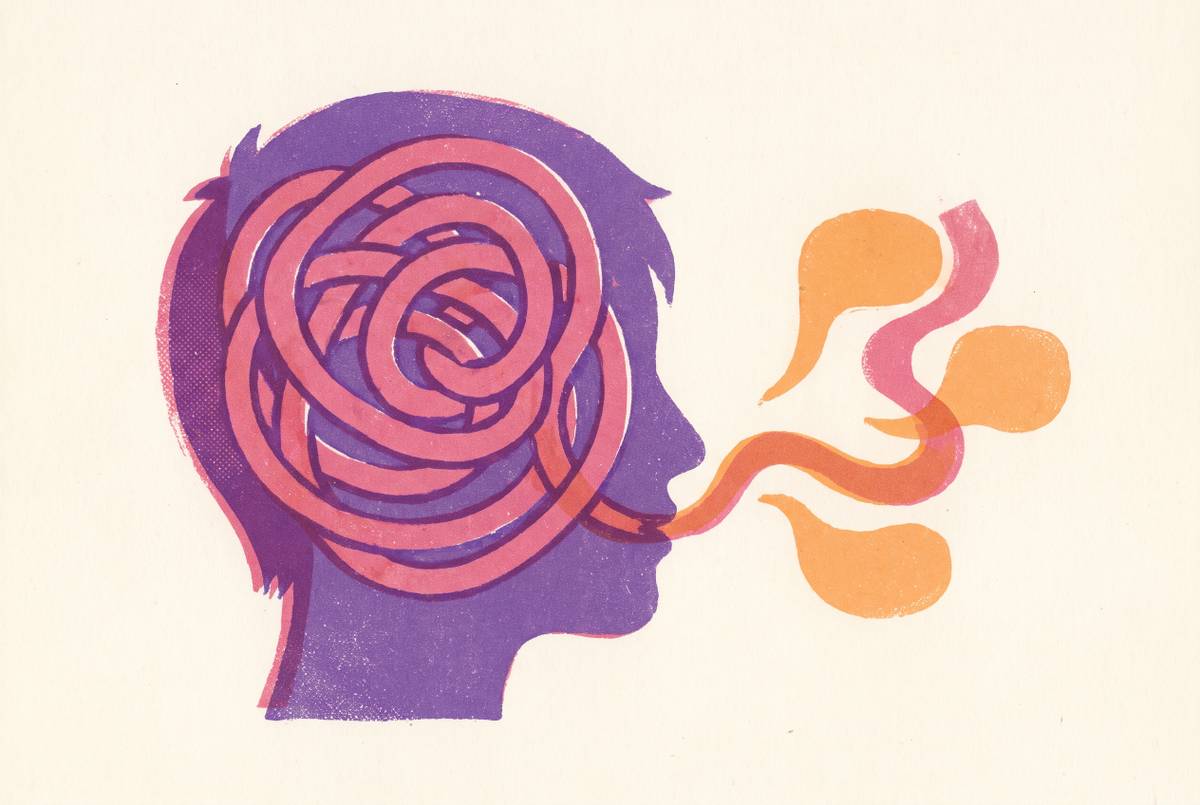
Rumination is a self-reinforcing loop, driven by the brain’s default mode network, that recycles emotionally charged material without resolving it. The emotional intensity keeps the loop running. Meanwhile, the amygdala, the brain’s alarm center, remains activated when emotional content is unprocessed, keeping arousal high and clear thinking difficult.
Why not just decide to stop thinking about it? Suppression competes for cognitive resources without changing the conditions that sustain the loop, and the effort tends to strengthen it. Willpower is being assigned the wrong job. Each recurrence of a thought retains its emotional charge. Interrupting rumination therefore requires a change in how the experience is processed.
How verbal labeling reduces emotional intensity at the neural level
Dr. Matthew Lieberman’s UCLA research shows that naming an emotion increases activity in the right ventrolateral prefrontal cortex while reducing the amygdala’s response. This is affect labeling, the act of putting a feeling into words. The prefrontal cortex becomes more active as the alarm quiets. A feeling that seemed like an all-encompassing emergency becomes something that can be named, without first having to be solved.
The effect does not require a belief in the exercise. Affect labeling research finds this dampening even when people do not intend to regulate their emotions and do not expect labeling to help. That separates it from cognitive reappraisal, which asks someone to reinterpret an experience deliberately. Labeling asks for words. There is no requirement to find a silver lining before identifying fear, anger, guilt, or longing.
Could this simply be the relief of distraction? The neural evidence points to a more specific process, because labeling decreases the amygdala response while neutral cognitive tasks do not. That finding supports a link between words and less intense feelings, though it does not show that every kind of writing works equally well. Expressive writing engages this process by directing words toward emotionally significant content. Its immediate contribution is to reduce the charge that makes repetitive thought so hard to leave alone.
How narrative structure turns raw emotion into processed memory
Naming an emotion is one operation, while constructing an account of an experience is another. Sustained expressive writing gives order and meaning to what would otherwise keep coming back as separate pieces charged with emotion. Eyzaguirre Bäuerle and Cañas Oliger (2026) describe this as facilitating “greater cognitive integration of traumatic memories”. The experience becomes part of an ordered account. That structure changes how it can be stored and retrieved, reducing the intrusive quality that keeps it replaying.
The Pennebaker paradigm gives this process a repeated form, with writing about a specific emotional experience for 15–20 minutes across four consecutive days. Repetition serves a different purpose here than in rumination. Instead of circling the same unresolved material, the writer builds narrative coherence across sessions. Writing about neutral topics does not bring the same benefits, which suggests that emotional processing helps more than taking the mind off the experience.
The same review identifies inhibiting an account of suffering, including keeping painful events secret, as a factor that maintains distress. Private writing provides a form for that account without requiring an audience. Michael Yin and Robert Xiao (2026) found that unsent messages became expressive containers for suppressed feelings, creating a pause for thought about a relationship and oneself. The message need not reach its recipient. This is a useful everyday illustration of how expression can do work separate from communication.
What the clinical evidence actually shows — and where it stops
Gergely and Kállay (2025) found a delayed but significant reduction in rumination between the start of an expressive writing intervention and a six-week follow-up. Their pilot study examined female Transylvanian Hungarian university students with subclinical depressive symptoms. The timing is important to the interpretation. An immediate feeling of relief is not the only relevant outcome, and a session that feels inconclusive does not necessarily settle whether a repeated protocol will help.
The same study found that depressive symptoms dropped meaningfully immediately after the intervention, with a large effect, and retained a moderate-to-large effect at follow-up. Some other benefits diminished by follow-up, however, so the findings do not support a permanent benefit from a brief intervention. Nor can a study of one group show how everyone will respond. The broader evidence favors more sessions and a specific writing topic over vague or one-off writing, suggesting that both repetition and focus contribute to the result.
These findings support expressive writing as a tool for reducing rumination and improving emotion regulation. Brief, self-directed expressive writing should not be considered an effective standalone method for decreasing clinical depressive symptoms. This article is informational, and readers with serious symptoms should seek professional support. The distinction allows the benefits to be taken seriously without asking writing to do more than the evidence supports.
Why the writing prompt and the framing of the session change what you get out of it
The same act of writing can produce different physiological outcomes depending on its instructions. Jacques and Alves (2025) compared reappraisal writing, which positively reframes a stressor, with self-compassion writing, which treats the writer’s response with kindness. Both reduced heart rate and alexithymia, or difficulty identifying and describing emotions. Their physiological effects were not identical, however. Reappraisal produced a distinctly higher LF/HF ratio, a cardiac marker of autonomic regulation, rather than simply duplicating the self-compassion response.
Self-compassionate writing was a significantly stronger predictor of better mood than purely emotionally expressive writing, which was linked to worsening mood. Greater rumination inhibited those improvements, while higher trait self-compassion predicted them. More disclosure did not automatically mean more relief. For heavy ruminators, this makes a self-compassion frame a potentially more useful entry point than an unrestricted invitation to pour everything out.
Why should instructions make such a difference? They direct both which emotional material appears and what the writer does with it. Prompts that ask people to identify emotions and consider how an event changed their thoughts and beliefs support emotional habituation, in which repeated, structured engagement reduces the emotion’s charge. Instructions that focus on cognitive restructuring help people gain insight instead. These outcomes can work together and go beyond venting, with the prompt helping to shape what the writer does in the session.
Matching the method to the person and the goal
Choose a method suited to the problem at hand. The Pennebaker Protocol has the deepest evidence base of the three approaches considered here, with more than 200 published studies. Frattaroli’s 2006 meta-analysis covered 146 randomized trials. It works best for processing a specific, named emotional experience when there is time to keep writing for sustained sessions.
CBT Thought Records serve a different need. Their structured identification and examination of cognitive distortions are especially useful for anxiety-driven rumination, because the format calls for objective examination. By contrast, stream-of-consciousness writing, or a brain dump, fits a diffuse sense of overwhelm without one identifiable source. Its openness can help surface emotional material, though the framing findings caution against treating unrestricted discharge as the best route for every heavy ruminator.
An ESTJ/ENTJ person who identifies with Extroverted Thinking may prefer the structured, trackable format of a thought record, while an INFP/ISFP person who identifies with Introverted Feeling may find free-writing a more natural way to explore values and complex emotions. These are illustrations of fit. Available time and the immediate goal remain part of the choice. Even a method backed by a great deal of research helps little if it asks too much for someone to use it.
How the writing medium — paper, app, or voice — affects the rumination-interruption process
Handwriting uses fine motor coordination, tactile feedback, and spatial awareness together, building stronger neural connections as the person writes. That gives paper a plausible advantage when slowness and depth are the goal. It does not establish universal psychological superiority. A deeply honest paper entry and a deeply honest digital entry can have similar benefits, because how deeply someone engages affects the benefits wherever the words go.
A few taps during a commute or in a waiting room remove the obstacle of not having writing materials at hand. Ease of access supports repeated practice over time. A distraction-free app meets that need, while an e-ink tablet feels like writing on paper and has the ease of a digital tool without the distracting notifications on phones and laptops.
Voice journaling is an option when the blank page itself is the barrier, because it removes the need to produce written text by hand. The evidence described here does not show which voice journaling app is best or that speaking and writing have the same clinical effects. When choosing a medium, look for one that makes it easier to start, stay focused, and use a specific prompt to give the session direction.
How to begin a deliberate expressive writing practice for rumination
Treat the first week as calibration. Choose a protocol, medium, and prompt that fit both the source of the rumination and the way you prefer to process it. For a specific emotional experience, begin with the Pennebaker schedule of 15–20 minutes across four consecutive days. Focus on feelings and what the experience changed in your thinking.
For anxiety-driven rumination, start instead with a structured CBT thought record. The record names the situation, the automatic thought, the emotional response, and the evidence for and against the thought. If rumination is particularly persistent, begin with one sentence acknowledging that the experience is genuinely difficult and that struggling with it is a human response.
Choose paper if slowing down and the ritual of pen-on-page help, a distraction-free app for writing on the go, or voice journaling if a blank page prevents a start. Then give the session a specific question. The question can address what about the experience still feels unresolved and what it would mean if it stayed that way, rather than relying only on a vague invitation to describe feelings. Plan for at least four sessions before assessing the method, because a single session offers only part of what cumulative practice can provide.
Expressive writing gives difficult thoughts words and structure so that the brain can process them and interrupt their repetition.
Sources
- Effects of Reappraisal and Self-Compassion Expressive Writing on Emotion Regulation - Teresa Jacques, Rui A. Alves, 2025
- Expressive writing in the light of integral psychology of the person - ScienceDirect
- STUDIA UBB PSYCHOL.-PAED., LXX, 1, 2025, p. 165-191 (Recommended Citation)
- Corrigendum: Training Positive Rumination in Expressive Writing to Enhance Psychological Adjustment and Working Memory Updating for Maladaptive Ruminators
- The Words That Can't Be Shared: Exploring the Design of Unsent Messages