Alexithymia and the Costs of Not Naming Emotions
Unnamed feelings create measurable damage across brain, body, and relationships.
Alexithymia means "without words for emotion," a term coined by psychiatrist Peter Sifneos in the early 1970s to describe something more specific than being quiet about your feelings. It's a measurable trait, not a diagnosis, and the costs of carrying it (or carrying even a mild version of it) appear in the brain, the body, and the outcomes of treatments meant to help.
That framing matters right away, because alexithymia gets confused with two things it isn't. It is not emotional repression, which implies feelings are present and suppressed on purpose. And it is not low empathy, a mix-up that does real damage to how people with the trait get perceived by friends, partners, and clinicians. Alexithymia is a signal-processing problem: the feelings and bodily sensations arrive, but the translation layer that would turn them into a word gets foggy. Per Neurodivergent Insights, the signal is there. What's missing is the decoder.
Researchers measure this along a spectrum, not a yes/no category, using tools like the 20-item Toronto Alexithymia Scale (Bagby, Parker, and Taylor, 1994) and the Bermond-Vorst Alexithymia Questionnaire. Both are self-report instruments, so the scores capture what someone can recognize and report about their own inner experience, not an objective outside measurement. A 2022 ScienceDirect neuroscience overview describes it as "a subclinical condition characterized by a low degree of emotional self-awareness." Four components make up the construct in the research: difficulty identifying feelings, difficulty describing them, a style of thinking oriented outward toward facts and events rather than inward, and a thin imaginal or fantasy life. The rest of this piece keeps circling back to those components.
How common alexithymia is, and who carries it in larger numbers
A European Psychiatry study out of University Medicine Greifswald (Krause et al., n=575) puts the general population figure at up to 10%, or roughly 1 in 10 people. That's the floor, not the ceiling. Subclinical shades of the trait extend well past that number, since plenty of people who'd never meet a diagnostic cutoff still sit down to describe how they feel and come up empty.
Prevalence climbs sharply in specific populations. A 2026 scoping review on alexithymia in neurodevelopmental populations confirms substantially higher rates among people on the autism spectrum and in dual-diagnosis groups. Kinnaird et al. (2019) found that 49.9% of autistic adults met the clinical cutoff for alexithymia. A separate study from Milosavljevic and colleagues found the figure at 55% among adolescents with autism spectrum disorder. Those aren't rounding errors next to the 10% general population baseline; they suggest the trait clusters heavily wherever the wiring for interoception and social-emotional processing runs differently to begin with.
There's also a socially manufactured version, one researcher Ronald Levant called "normative male alexithymia." This isn't a neurological condition so much as a training outcome: boys raised with a smaller emotional vocabulary and active discouragement from expressing vulnerability grow into men who score higher on alexithymia measures, not because their circuitry demands it but because nobody handed them the words early enough for the habit to form. Culturally common, in other words. Not neurologically fixed. If a chunk of alexithymia is trained in, can it also be trained out? The rest of this piece is essentially an attempt to answer that.
What the brain looks like when emotion naming is impaired
The 2026 Krause et al. study didn't just survey people, it scanned them. Using resting-state fMRI on 575 participants aged 29 to 60, drawn from the population-based SHIP-TREND cohort, the researchers found that higher scores on the Toronto Alexithymia Scale tracked with altered functional connectivity within the frontoparietal network, and between the dorsal attention and salience networks. Crucially, this held even after controlling for depressive symptoms, which rules out the easy explanation that the brain differences are just depression wearing an alexithymia costume.
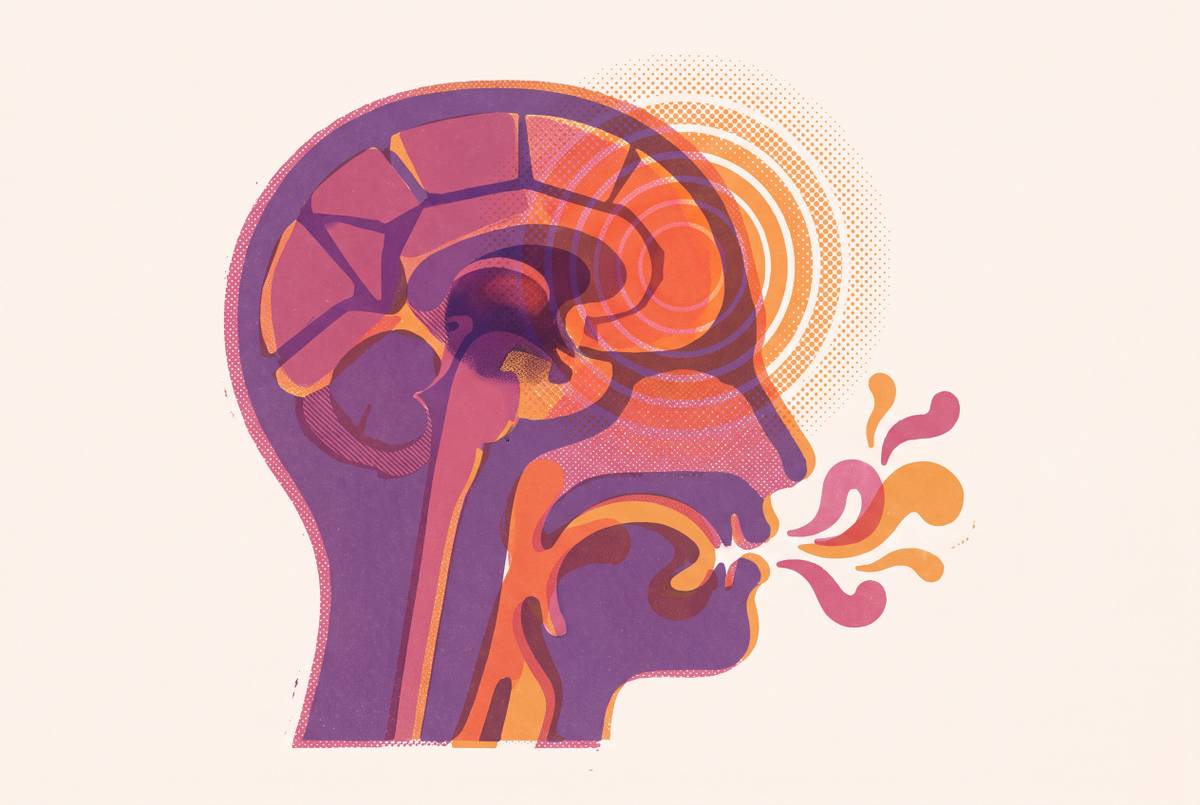
The "difficulty identifying feelings" subscale, specifically, mapped onto disruptions in attentional, salience, and sensorimotor networks. That's a bigger claim than it sounds. It means the deficit isn't a vocabulary gap, some missing internal directory of feeling-words. It's a routing problem, in how the brain prioritizes and directs attention toward signals coming from the body.
A separate mechanistic review using EEG found that people with alexithymia consistently show right-hemisphere dominance in theta and alpha band power and connectivity, during both neutral tasks and ones designed to provoke emotion. And a 2024 meta-analysis pulling from 32 studies and nearly 8,000 participants found alexithymia strongly linked to interoceptive confusion and reduced interoceptive awareness, building on earlier work by Brewer, Cook, and Bird arguing the deficit runs broader than language.
Putting those findings side by side reveals a pattern: the circuitry for noticing internal states in the first place looks different, not just the circuitry for labeling them once noticed. Which suggests behavioral fixes aimed only at "find the right word" are starting one step too late. The noticing has to happen before the naming can.
The measurable costs: what accumulates when feelings stay unnamed
Alexithymia, when present and unaddressed, predicts worse psychiatric treatment outcomes overall, per Pinna et al. (2020). That's not "alexithymia feels bad." That's "alexithymia makes the treatments meant to help other conditions work less well." Therapy, medication management, structured interventions, all of it runs less smoothly when the person in the room can't identify what they're feeling well enough to report progress or setbacks.
Work backward from there and the picture gets grimmer. Per Preece et al. (2024), cited in a Frontiers in Human Neuroscience review, alexithymia functions as a transdiagnostic risk factor that sits upstream of anxiety, depression, and stress responses rather than merely showing up alongside them. It's less a symptom riding shotgun and more a condition that helps drive the car.
Physical health takes a hit too. The salience and sensorimotor network disruptions described earlier offer a plausible mechanism for somatic health consequences: bodily signals that can't be emotionally decoded may appear instead as physical complaints nobody can quite explain. Add the relational cost, which is more intuitive and doesn't need a scanner to confirm: describing feelings is part of how closeness gets built and sustained, so difficulty doing it strains the mutual back-and-forth that relationships run on. Lining those costs up (worse treatment response, elevated psychiatric risk, unexplained physical symptoms, strained relationships) makes a subclinical trait look less like a personality quirk and more like a slow leak in several systems at once.
The scientific debate over whether naming emotions helps
Here's where it gets genuinely interesting, because the research doesn't agree with itself cleanly. Matthew Lieberman's affect labeling work found that naming an emotion dampens self-reported distress and is associated with reduced activity in emotion-processing brain regions. That's a neural signature that looks a lot like deliberate emotion regulation, and it occurs alongside long-term reductions in electrodermal responses (skin conductance, essentially a sweat-based stress readout) to feared stimuli.
But Nook et al. (2022) found something that complicates the tidy "just name it and you'll feel better" story. In their Study 1, participants who named an emotion before attempting to reappraise it actually reported feeling worse than participants who skipped the naming step and went straight to regulation. They called this affect crystallization: naming can lock an emotional experience into place, making it more solid and, ironically, more resistant to being talked down from.
Those two findings aren't really fighting each other, they're describing different timescales. Crystallization occurs in short-term lab tasks where someone names a feeling and then immediately tries to reappraise it. The dampening effect occurs in sustained labeling practice and real-world exposure over time. So naming an emotion in the moment is not guaranteed to make things feel lighter right away, and might briefly make things feel heavier. It's the practice, done repeatedly, that seems to build the regulatory capacity. A 2024 UCLA clinical trial (Burklund, Davies, Niles, Torre, Brown, Vinograd, Lieberman, and Craske, published in Frontiers in Psychology) called affect labeling "a promising new neuroscience-based approach to treating combat-related PTSD in veterans," which is about as real-world as this research gets: not a lab task, but a sustained clinical application where the long-game dampening model has actual traction.
How expressive writing works as a naming practice, and what makes it go wrong
James Pennebaker's original protocol is almost comically modest given how much research it launched: 15 to 20 minutes of continuous writing, on 3 to 4 consecutive days, about the deepest thoughts and feelings tied to something stressful. That's it, given that 15 to 20 minutes of continuous writing, on 3 to 4 consecutive days, about the deepest thoughts and feelings tied to something stressful, is almost comically modest given how much research it launched. No special app, no elaborate ritual. A review in Psychological Bulletin pooling 146 studies and more than 10,000 participants found this produced reliable improvements in both psychological and physical health outcomes, which is a fairly large stack of evidence resting on a fairly small daily time commitment.
The neuroimaging side of the research frames affect labeling, putting feeling into words, as a form of incidental emotion regulation. Neural responses recorded during labeling tasks have been linked to subsequent changes in psychological and physical wellbeing, which suggests the mechanism has some durability to it and isn't just a momentary mood lift that evaporates by dinner.
Why does writing specifically do this? Translating a churn of feeling into language forces the brain to structure something chaotic into a narrative with a beginning, middle, and some shape to it. That structuring interrupts rumination, because the mind no longer has to hold the unresolved material in working memory the way it does when a feeling just sits there, unlabeled, circling. There's also a cognitive defusion angle borrowed from a well-known therapeutic approach: writing creates an observer position. The writer becomes the person watching the thought pass by, rather than being fused with the thought itself. That's the same mechanical move that makes labeling useful in therapy even in cases where it doesn't make the feeling disappear.
Unstructured venting that just restates distress, without ever moving toward meaning, can make things worse rather than better. The benefit isn't coming from emotional release for its own sake. It's coming from narrative structuring, from taking the mess and giving it a shape a reader (even a reader who is only ever the writer) could follow. So the goal of any writing practice built around naming feelings isn't catharsis. It's coherence.
Why alexithymia-aware approaches to emotion naming require different entry points
Ask someone with pronounced alexithymia "how did that make you feel?" and watch the question just sit there, unanswered, because the identifying step it presumes hasn't happened yet. That's not stonewalling. It's the equivalent of asking someone to translate a sentence from a language they were never taught to read. Standard emotion-focused prompts assume a decoding step that, for a meaningful chunk of the population, simply isn't online yet.
The research points toward different entry points instead. Body sensation mapping, locating where something is felt physically before attempting to name what it is, gives the noticing step somewhere to start. Binary or scaled questions ("worse than yesterday or better?") sidestep the open-ended query that demands a vocabulary word nobody has ready. External reference points, like asking what an outside observer would have noticed, and behavioral observation rather than pure introspective report, both work around the same bottleneck from a different angle.
This tracks with the interoception research directly. That 2024 meta-analysis of roughly 8,000 participants found alexithymia tied to interoceptive dysfunction, though the strength and direction of the relationship shifted depending on which specific interoceptive measure researchers used. Translation: body awareness and emotion labeling are tangled together, but not in a single tidy line, which is why building a body-check habit before an emotion-naming habit targets the layer the neuroscience points to.
Writing is not the only medium that does this work. Drawing, structured templates, lists, and voice recording can all carry the naming process. What matters is the externalization, not the specific tool doing the externalizing. Voice, in particular, lowers the barrier for people who find a blank page genuinely hostile, whether that resistance comes from alexithymia, differences in executive function, or plain old friction around sitting down to write anything. Speaking through a structured prompt can do the same reflective work as writing, just through a different door. The practice of naming emotions is needed most by the exact people for whom starting it is hardest, so widening the entry point isn't coddling anyone. It's just following where the neuroscience actually points.
Building a naming practice that is easy enough to sustain
Pennebaker's protocol wasn't built around 15 to 20 minutes a day because researchers were being stingy with people's time. The evidence points to the structuring process itself as what drives the benefit0 minutes a day because researchers were being stingy with people's time. It worked at that dose because the mechanism driving the benefit is cognitive structuring, not sheer volume of words on a page. More writing doesn't automatically mean more coherence.
Giving a journaling practice an actual job changes what it produces, too. Journaling aimed at goals tends to increase goal attainment. Journaling aimed at values tends to increase behavioral alignment with those values. Journaling aimed at gratitude tends to increase life satisfaction. An open-ended blank page, "write about your day," carries more friction and less payoff than a practice with a defined target, mostly because deciding what to write about is itself a cognitive tax that a defined structure removes.
A simple three-part check-in does a lot of that structuring work on its own: what happened, how it felt, what comes next. That's not a groundbreaking template, and it isn't supposed to be. Its entire value is in giving the naming moment a predictable slot, so the mental energy goes toward the naming itself rather than toward staring at a cursor wondering where to begin. For people who think more clearly out loud, a prompt-guided structure that's spoken rather than typed serves the same function; the externalization still happens, the medium just shifts to match how a given brain actually processes.
Carry the caution from the expressive writing section forward, because it applies here with equal force: the target is narrative coherence, not emotional discharge. The same body of research that established journaling works shows a short, structured check-in aimed at meaning-making will outperform a long, unstructured vent. Lining up what the neuroscience, the clinical outcome data, and the habit-formation research all say shows they converge on one unglamorous but sturdy conclusion. The cost of leaving feelings unnamed is measurable, in brain connectivity, in treatment outcomes, and in physical symptoms that occur with no clear origin. And the fix doesn't need to be elaborate to work. It just needs a low enough barrier that a person actually starts it, and then keeps starting it again tomorrow.
Sources
- Alexithymia - an overview | ScienceDirect Topics
- How alexithymia shapes functional networks: Insights from a general population study
- Alexithymia in neurodevelopmental populations: a scoping review of Down syndrome, autism spectrum disorder, and dual diagnosis
- What Is Alexithymia? | Neurodivergent Insights
- Neural Correlates of Alexithymia Based on Electroencephalogram (EEG)—A Mechanistic Review
- Frontiers | Alexithymia in multiple sclerosis: past, present and future
- frontiersin.org
- academic.oup.com