Why Introspective Reports Are Often Inaccurate
We construct plausible stories about our minds rather than reading them directly.
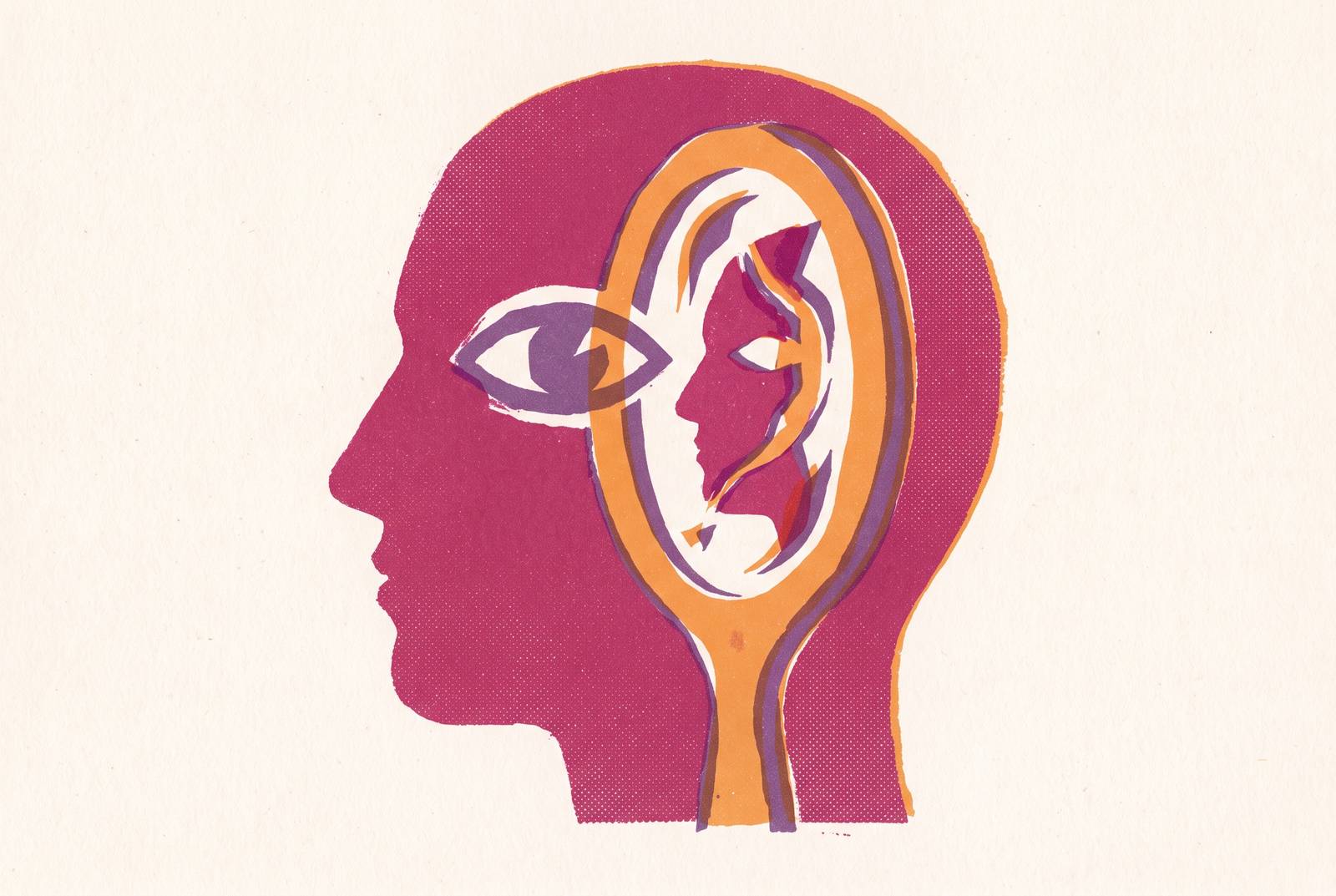
You know why you chose that apartment, why you snapped at your partner, why one job offer felt right and the other did not. You know this with the same bone-deep certainty that you know your own name. The research says otherwise, and the distance between those two things is the subject of this piece.
The gap has a name before it has a mechanism. The introspection illusion is a cognitive bias in which people treat their own inner reports as authoritative while dismissing everyone else's as unreliable. Nisbett and Wilson's foundational 1977 Psychological Review paper put the stronger claim on the table: there may be little or no direct introspective access to higher-order cognitive processes. When people explain how they solve a problem or why they formed a preference, they are not transcribing an internal readout. They are assembling a plausible story from implicit causal theories about how minds work, then presenting it with the felt authority of first-hand observation.
The problem compounds itself because the bias is self-reinforcing. You experience your own introspections as direct and transparent, so you never catch yourself doing the thing you so readily catch in others. That asymmetry is precisely what makes the failure hard to notice from the inside, and what makes external evidence necessary to see it at all.
What introspection actually does instead of reading out mental states
The everyday model of introspection imagines a kind of periscope: point it inward and you observe your own cognitive machinery in operation. The research model is closer to a novelist writing a first draft from memory after the events have already happened. When people report on their reasoning processes, they are generating reconstructions rather than reading off observations, guided by whatever implicit theories about mental life they have absorbed rather than by any direct contact with the processes themselves.
The deepest structural problem is that introspection lacks the sensory feedback loop that makes perceptual reports comparatively trustworthy. Looking at a red tomato gives you continuous visual information you can check against: the color stays red, the shape holds, and if you doubt the report you glance again. Explaining a decision gives you no equivalent anchor. There is no external object to revisit, no sensory channel carrying the "reason" into view. The report floats free of anything that could correct it.
Lu's 2024 Syracuse dissertation pushes this further with an architectural claim: introspection has no proprietary neural mechanism of its own. It is assembled from sensory, conceptual, and linguistic processes, and it inherits every error those component systems bring with them. Add the fact that people use introspective vocabulary differently, so one person's "brief glimpse" maps onto another's "no experience at all," and the result is a report that can fail at two distinct points with no current method cleanly separating them. Access might fail before the report is even attempted, or translation into language might fail after. Either way, the output looks identical from the outside: a confident sentence that may or may not track anything real.
How brain evidence confirms that introspection borrows social-cognition tools rather than using a dedicated faculty
If introspection were a dedicated faculty, the brain would show some specialized circuit lighting up when people inspect their own mental states. It does not. What it shows instead is the brain turning the same interpretive machinery it uses to read other people's behavior inward on itself. You understand yourself the way you understand a colleague: by constructing a plausible account of what someone with those behaviors was probably thinking.
Petter Johansson's group at Lund University provided the first neuroimaging description of the networks involved in the choice blindness paradigm. Critically, the same infrastructure showed up for both failure modes: the failure to detect that a choice had been manipulated, and the production of a confabulated explanation for a choice never actually made. The brain does not run one system for honest introspection and another for fabrication. It runs the same interpretive engine in both cases, which is why the fabrications feel so much like the real thing.
Research using brain-computer interfaces sharpened the finding. When internal decision evidence is weak and variable, introspective failures arrive with higher confidence than genuine introspective reports. The system generates its most assured narrative precisely when it has the least genuine information to draw on. That inverted confidence-accuracy relationship is the closest thing to a neural signature of confabulation: the constructive process fills the gap with a plausible story and presents it with the felt certainty of true access.
What choice blindness shows about confabulation in ordinary decision-making
Choice blindness is the simplest demonstration that a fully fabricated introspective report can feel entirely genuine. Johansson and colleagues introduced the paradigm at Lund University, and the procedure is straightforward enough to picture. Participants chose between pairs of faces based on attractiveness. The researchers covertly swapped the chosen and unchosen faces. Most participants failed to notice the mismatch, then went on to offer confident explanations for why they had preferred the face they had not actually selected.
The explanations were sincere in a way that matters. Participants were not lying in any strategic sense, and they were not guessing: they genuinely believed they were reporting the reasons behind a real preference. Detection rates stayed low even when the mismatches were conspicuous, which rules out simple inattention as the explanation. Something more specific is going on. The mind does not monitor the relationship between intention and outcome the way classical decision theory assumed it would. It constructs a retrospective account that fits whatever outcome it is presented with, then serves that account up as memory.
The finding travels beyond the laboratory. A clinical study applied the choice blindness paradigm to participants diagnosed with OCD, alongside those with another anxiety or mood disorder and healthy controls, on the premise that ego-dystonic obsessions might reflect limited introspective access. The implication is uncomfortable for anyone who treats self-knowledge as a clinical given: the same confabulatory machinery operates in conditions where accurate self-report is not an academic curiosity but a direct stake in treatment.
How external feedback actively corrupts real-time self-monitoring, not just retrospective reports
One of the most intuitive defenses of introspection goes like this: memory may distort retrospective reports, but surely people know what they are currently thinking or feeling. A 2025 Psychological Science study by Polychroni and colleagues removes that defense. Across a replication experiment with 111 participants, the authors showed that people reconstruct their internal states from external performance cues rather than observing those states directly, even in the moment. Participants were more likely to report mind-wandering after a surreptitious delay in the onset of response targets, a delay they did not consciously register as external. Confidence in on-task reports dropped when a corresponding indicator falsely implied poor performance. A fabricated external signal was enough to revise what people believed they were experiencing.
The methodological consequence is worth stating plainly. Studying attention or any other internal state by correlating self-reports with physiological data depends on the accuracy of those self-reports. If the reports are themselves driven by external feedback, the correlation measures something other than what researchers intend. It measures how people respond to cues about their performance, not what their internal state actually was. That is a serious problem for a substantial body of research, and it suggests the corruption runs deeper than post-hoc storytelling.
Why individuals vary so much in introspective accuracy, and what that variation reveals
Introspective accuracy is not distributed evenly across people. Alexithymia, formally defined as difficulty identifying feelings, difficulty describing feelings, and an externally oriented thinking style, represents one end of a distribution where introspective access to emotional states runs particularly thin. The variation matters because it shows that introspective failure is not an artifact of artificial laboratory conditions. It scales with real psychological differences and carries measurable consequences for mental health.
The harder question follows directly. If some people are significantly worse than others at introspecting accurately, and none of them can detect this from the inside, then felt confidence about one's inner states is not a reliable guide even to relative accuracy. You cannot calibrate yourself against a signal you cannot perceive. The person most convinced of their own self-knowledge may be the person operating with the least access to it, and the very certainty acts as a guard against discovering the gap.
The strongest objection: sometimes introspection does track reality
The skeptical case is not the whole field. A significant line of criticism argues that studies like the classic "stocking case" from Nisbett and Wilson have been misread. The critics contend that researchers wrongly took the psychological causes of mental processes as the target of introspection, when the appropriate target is the processes themselves. Introspection may be better at reporting what the mind is doing than at explaining why it is doing it, and the 1977 critique aimed at the second question rather than the first.
The partial-access view holds that introspective reports can be more accurate when the influential stimulus is salient and when the report is corroborated by behavioral and neural data. Neuroscientists have not abandoned self-report as a tool. They treat it as informative rather than infallible, which is a meaningful distinction. McKilliam's 2025 paper in Ergo goes further, arguing that detecting introspective errors need not be an intractable methodological problem. Natural kind reasoning, the iterative application of inference to the best explanation, can allow researchers to detect introspective errors even in difficult cases such as judgments about mental imagery. Consciousness science can still be built on introspective evidence, on this view, provided it develops principled methods for identifying when reports go wrong rather than abandoning self-report altogether. The live debate is not whether introspection ever works but when it works, and no consensus guidance currently exists about how to proceed when introspective reports diverge from behavioral and neural data. That absence of guidance is itself a finding about the state of the field.
How the LLM introspection debate shows the problem is structural, not uniquely human
The clearest evidence that the limits of introspection are architectural rather than psychological comes from systems with no psychology at all. Singh, Linzen, and Ravfogel's paper, published at COLM 2026, examines whether large language models can introspect on their own internal states. They identify two conditions any paradigm must meet to establish genuine introspection: privileged access, meaning the report must depend on internal states beyond what the input alone provides, and second-order computation, meaning the report must be produced by meta-representations of first-order representations. Current evidence falls short on both. In self-report classification tasks, labels derived from hidden states turned out to be recoverable from the input alone. The model's apparent self-knowledge may be input-driven prediction rather than genuine internal monitoring. In intervention-awareness paradigms, models failed to distinguish actual activation interventions from manipulations of the input prompt, suggesting their reports track "something is unusual" rather than the specific source of the unusualness.
The parallel is instructive precisely because LLMs have no emotional investment in self-flattery or motivated reasoning. If the structural conditions for genuine introspective access are not met in a system without those biases, the problem cannot be blamed on human vanity. It is a property of what it means for a complex information-processing system to report on itself.
The practical upshot is that introspection improves when it has external scaffolding: when it is prompted rather than free-floating, articulated rather than held silently, and revisited over time rather than treated as a single accurate snapshot. Salient stimuli produce more accurate reports, which maps onto a simple principle. Giving the reflective process a specific, concrete question to answer reduces the space for post-hoc narrative construction. Articulating thoughts aloud externalizes the construction process in a way that silent rumination cannot, making it easier to notice when an account is being invented rather than observed. Voice journaling apps like Joice capture what you say and think in real time, creating a searchable record of your reasoning as it unfolds, so you can later compare your live account against the explanations you construct in hindsight.
Because introspection borrows the same interpretive machinery the brain uses to understand others, it is vulnerable to the same confabulation patterns, and detecting those patterns requires seeing how your explanations for your own behavior shift or stabilize over time. A transcript of what you actually said, without reliance on memory or post-hoc editing, can help surface those shifts. Joice's automatic transcripts of voice entries, paired with its pattern-detection across entries, offer a way to compare your reasoning about a decision at the time you made it against how you explain it weeks later. Self-knowledge, on this view, is less a state to be discovered than a practice to be built. The gap between felt certainty and actual access will not close entirely, but it narrows when introspection gets the kind of structure that every other reliable measurement requires: a specific question, an external record, and the chance to revisit the answer.
Sources
- McKilliam
- Can LLMs Introspect? A Reality Check
- Relating Introspective Accuracy to Individual Differences in Brain Structure
- Syracuse University Syracuse University SURFACE at Syracuse University
- Introspective Access or Retrospective Inference? Mind-Wandering Reports Are Shaped by Performance Feedback - PubMed
- People confabulate with high confidence when their decisions are supported by weak internal variables