When the Journal Asks the Next Question Back
AI prompts work best when they turn reflection into the next question that needs answering.

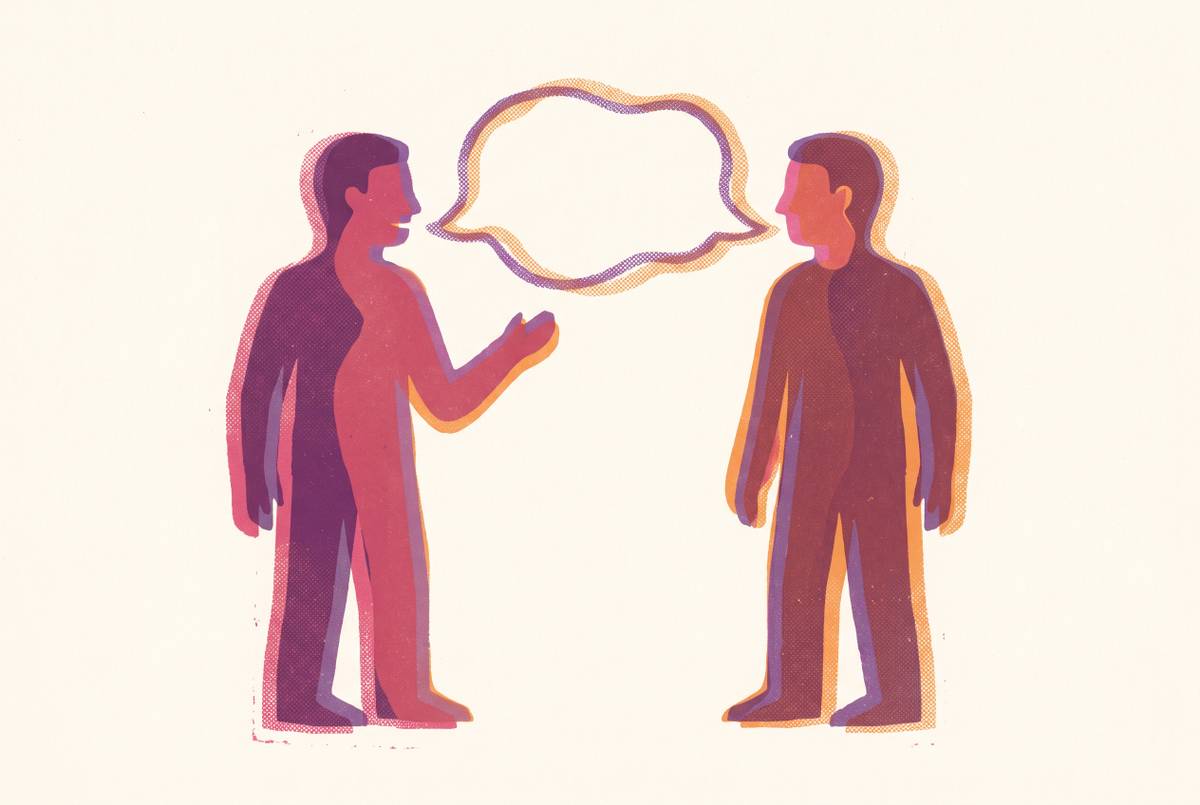
A conversational voice journaling app with AI prompts is most useful when it turns a spoken entry into a relevant follow-up question. The central argument is that journaling deepens through a question-and-response loop, and that prompts, medium, and practice must work together to keep that loop moving.
Why the journal's job is to generate questions, not store answers
A record preserves what someone thought at a particular moment. That is useful, but it is not the same as helping the thought develop. An entry can get the details of a hard day right without making the pattern of its feelings any clearer. Once the account raises a question about why something hurt, what expectation went unmet, or what might change, the journal has become more than an archive.
This changes what counts as a productive session. A polished account can feel complete while leaving its central assumption untouched. An unfinished entry can expose exactly the assumption that needs attention. The question-and-response loop is therefore not a decorative addition to reflective journaling. It is the mechanism by which an answer becomes material for further inquiry.
What happens in the brain when writing forces a thought into language
Putting a feeling into words differs from silently circling it. Matthew Lieberman’s fMRI work at UCLA found that naming emotions reduced amygdala activation and increased activation in the right ventrolateral prefrontal cortex, a region involved in inhibitory control and the linguistic processing of emotion. This process is called affect labeling. The feeling becomes something that can be named and examined. That shift helps explain why a question about an emotion can do different work from a request to recount events.
Naming, however, is not the same as venting. Pennebaker’s data showed that just putting anger on paper did no good. Narrative construction was what helped. This means organizing emotional experience into a coherent account with causes and consequences. The distinction is important because a journal can contain intense language without developing an explanation. Emotional volume is not the same as reflective depth.
Writing also offers cognitive offloading, placing material on the page instead of requiring the writer to hold everything in working memory. A prompt narrows that demand further by specifying what needs attention. It gives the prefrontal cortex a defined problem to organize. The task becomes smaller without necessarily becoming shallower. Labeling a feeling and tracing its cause can be more manageable than deciding what, out of everything, deserves an entry.
The blank page supplies no such instruction. It does not by itself direct the writer into narrative construction, and it can leave default mode network rumination undisturbed. Circular entries need not mean someone is “bad at journaling”. They may mean that the task has no structure. Free writing still has uses, including creative unblocking, but its aim at that moment is different.
These mechanisms also set a limit on the neuroscience claim. Evidence about affect labeling does not show that every emotional prompt, or every guided journal, has the same effect. A question about the facts may bring back an event without helping the writer name or sort out what it meant to them emotionally.
How different prompt structures do different cognitive jobs
A prompt is a cognitive instruction disguised as a question. “What happened today?” asks for episodic memory retrieval, which is useful for tracking experiences and establishing a record. Its answer can be complete on its own. A writer can list the events, close the notebook, and leave without encountering anything that requires another question.
An affect-labeling prompt changes the assignment from describing an event to naming the feeling attached to it. The distinction is small in wording but substantial in purpose. An account of what happened supplies context, while an account of the emotional response supplies something to investigate. Why did this event bring on that feeling?
Causation prompts then ask the writer to connect the response to its source. Forward projection asks what this understanding might mean for what comes next. Sequence gives these questions their leverage. Moving from recall to labeling to causation to forward projection lets each answer supply the material for the next task. Without that connection, even thoughtful questions can feel like a questionnaire.
Shadow work journaling, rooted in Jungian psychology, illustrates the more searching end of this structure. It starts with a surface observation and follows it toward what has been rejected or repressed. The method treats the first answer as only part of the story. Its prompts invite descent rather than completion, making the question-generating principle especially explicit.
Fixed prompts make a different tradeoff. The Five Minute Journal’s morning and evening structure gives the writer clear tasks, such as looking things over and thinking ahead, which make it easier to start. Predictability is part of its usefulness. Yet a recurring question may not provide enough room to pursue a complicated answer. Prompt design therefore involves both an entry point and an opening beyond it, with the balance depending on the work the writer needs to do.
Why matching the prompt format to the person matters as much as the prompt itself
Personality, purpose, and available time influence whether a format supports inquiry or makes the session feel like another obligation. The goal is the clearest place to begin. Task organization, creative unblocking, emotional processing, and goal tracking are different jobs, even when all take place in a notebook. A mismatch can produce frustration that looks like a lack of commitment but begins with the wrong assignment.
In Julia Cameron’s The Artist’s Way, Morning Pages are three pages of unfiltered, stream-of-consciousness writing every morning. Their value lies precisely in not imposing a question. The aim is to drain mental noise so that creative thought has room. For some writers, this may prepare the ground for inquiry. Judging the method only by whether it generates a follow-up question would miss its purpose.
By contrast, a short, fixed format suits the need for a low-barrier start. The Five Minute Journal offers that structure, but ease of repetition and depth of emotional processing are not identical goals. A format can support one while limiting the other. Someone following a complicated emotional thread needs room that a tightly limited entry may not give them.
Goal tracking introduces a further requirement, which is a return visit. An entry about an aim establishes a point of reference, but a later review asks what has changed since it was written. The format needs to accommodate that comparison. Weekly progress reviews build the next question into the practice. Here, the decisive design choice is not how expressive an individual entry feels, but whether the journal supports an ongoing account of progress.
How does talking out loud change the questions a journal can ask?
How someone keeps a journal shapes what they can look into. Handwriting involves a broader network of motor, sensory, language, and memory-related activity than typing, including the motor cortex, somatosensory cortex, visual processing, Broca’s area, and the hippocampus. That difference is neural, not moral. This difference means that handwriting and typing should be treated differently for some reflective goals.
Digital tools offer a different set of strengths. Search, persistence, and cross-referencing allow a writer to connect a current question with an entry from six months ago. The older answer need not remain buried. These capabilities change the journal from a sequence of isolated sessions into a searchable conversation with a past self. Typing’s value therefore extends beyond how the words first reach the page to how they can be found and reconsidered.
Speaking changes the conditions of expression again. Michael Yin, Robert Xiao, and Nadine Wagener’s ’26 research, Reflective Motion and a Physical Canvas: Exploring Embodied Journaling in Virtual Reality, examined journaling through movement and speech. The study found that, when writing-based norms and affordances were absent, participants tended toward unfiltered emotional expression, sometimes dispensing with words altogether. The evidence concerns embodied journaling in virtual reality. It supports the narrower point that changing the medium can change the emotional register of expression.
That distinction helps clarify the promise of voice journaling without overstating it. Speaking may surface raw material that writing subsequently organizes, so the modes can complement each other. An immediate spoken response may be less edited than a considered written one. Its usefulness depends partly on whether the next question helps give that material shape.
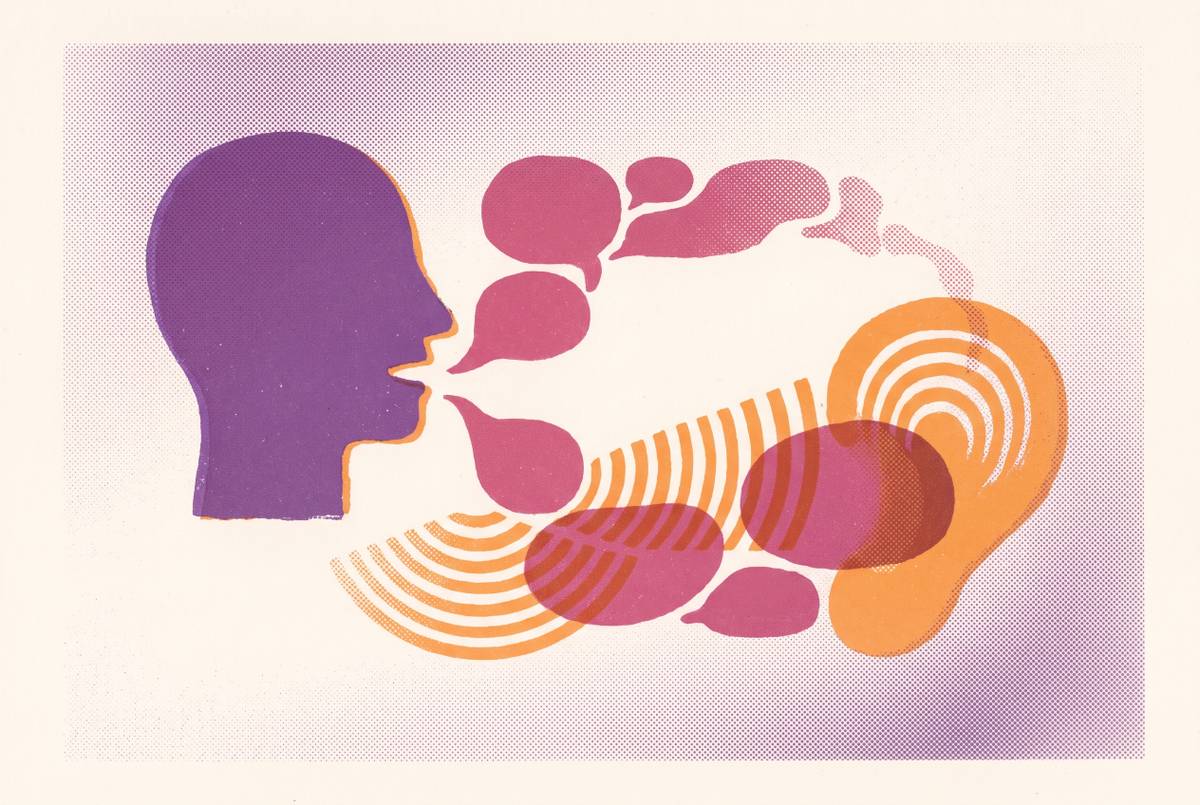
For someone looking for an app that takes spoken entries and asks AI-generated follow-up questions, a transcript keeps what was said, while a responsive prompt gives the speaker a reason to look into it further. A fixed spoken question can lower the barrier to starting, while a question grounded in the answer can continue the thread. A searchable history lets the writer find earlier threads again.
What it takes to build a practice that keeps generating new questions over time
A deepening practice needs three conditions to work together. The format must fit the goal, the prompts must lead to more questions, and the writer must go back to earlier entries. None can fully substitute for the others. A well-chosen prompt loses continuity if every session starts from nothing, while an extensive archive offers little guidance if it is never revisited.
Emotional processing, creative unblocking, goal tracking, and shadow inquiry each establish a different thread for subsequent entries to follow. That purpose need not turn the journal into a rigid form. Choosing a structured paper notebook, a digital app with saved prompts, or a voice tool that starts with a spoken question then becomes a decision about removing friction from that particular task.
Returning to prior entries is what makes the thread visible. Writing can provide closure by placing unfinished mental material outside working memory, while rereading can reopen it with the benefit of later understanding. The earlier entry becomes a prompt in its own right. What once seemed to explain everything may now show a cause that was missed or an assumption that needs a closer look.
Consistency also depends on a format that is easy enough to keep. Short, repeatable sessions offer more opportunities to resume a thread than a demanding practice used only sporadically. Duration alone cannot guarantee depth. A brief entry that follows an unresolved question has a different role from a long entry that circles familiar ground.