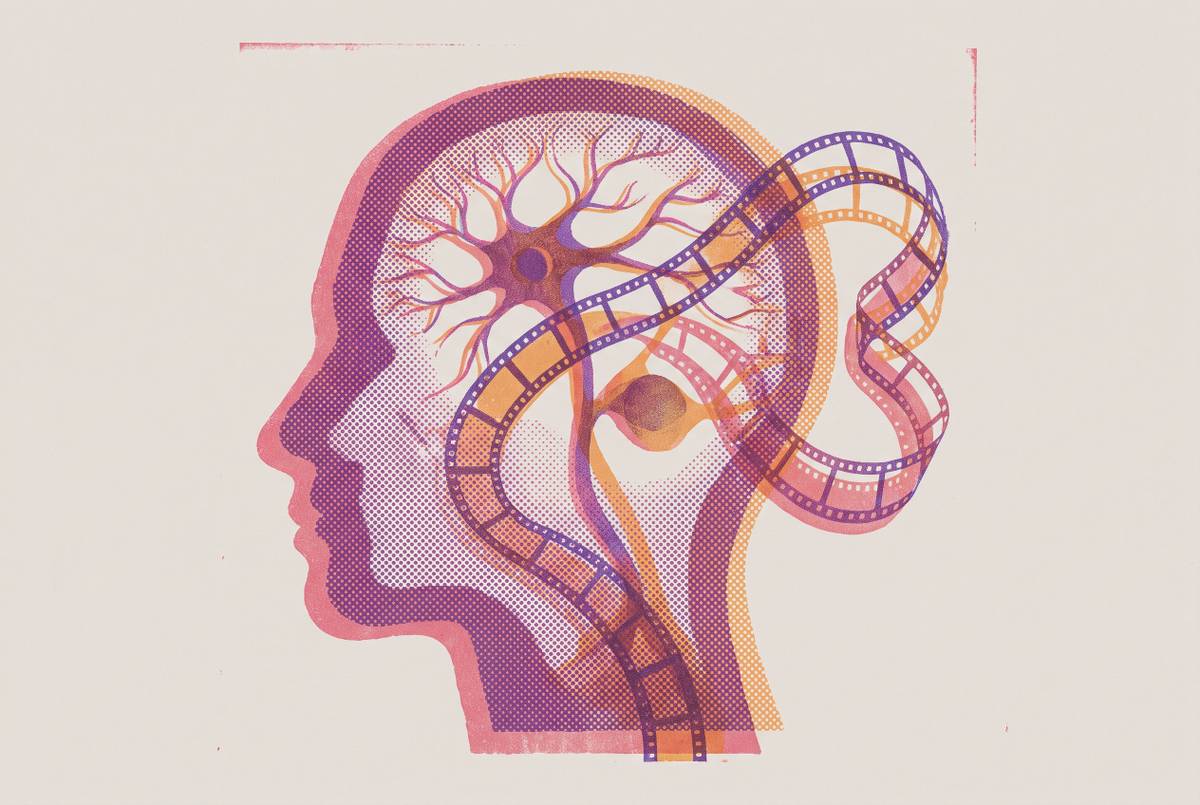
Journaling as Structured Affect Labeling Practice
Naming your emotion, not just the event, is what actually calms your brain.
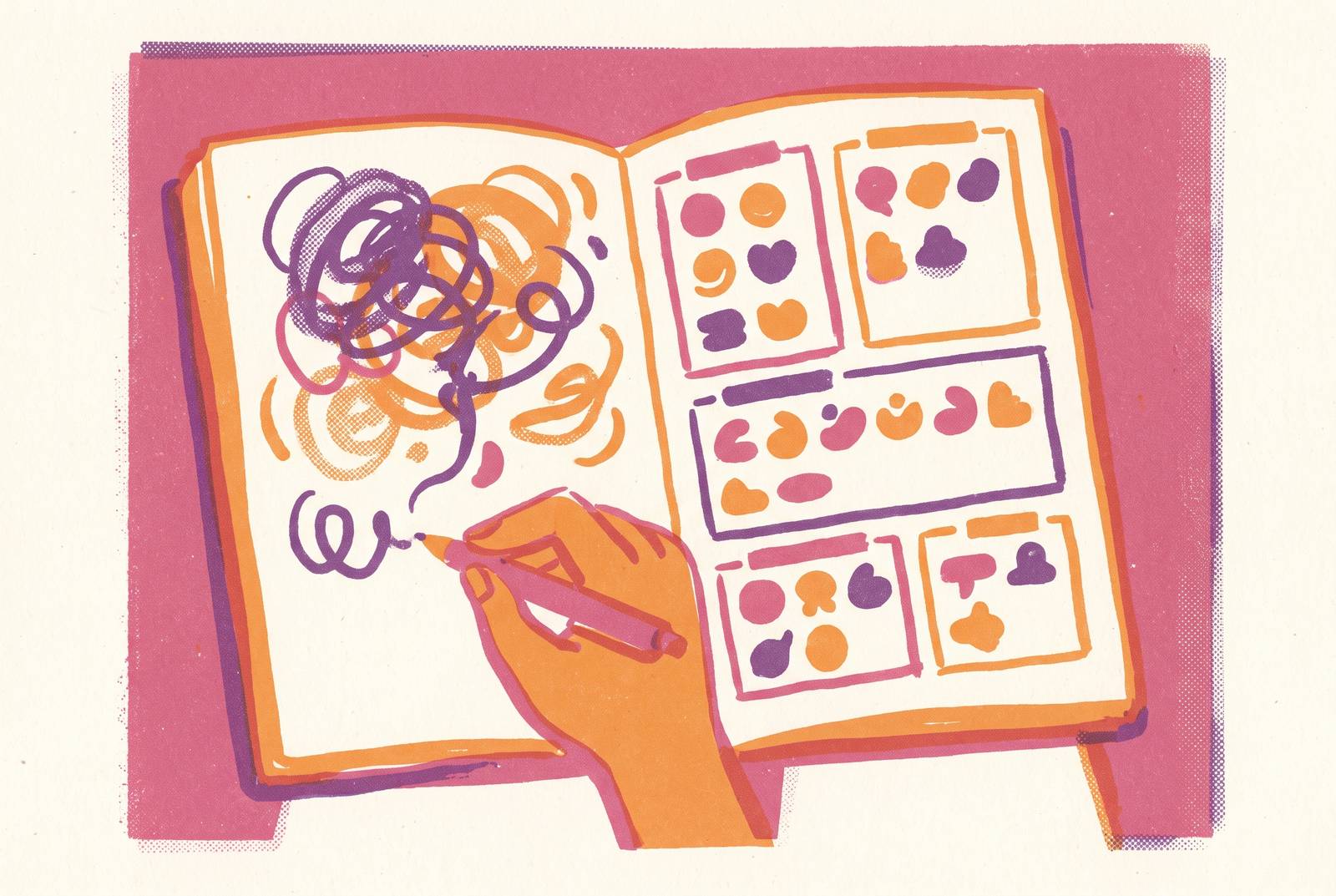
Journaling changes brain activity, but only under specific conditions: the writing has to name the emotion, not just describe what caused it. That distinction, between labeling a feeling and narrating the event that produced it, is what separates a journal entry that dampens amygdala reactivity from one that just moves words around on a page. This piece walks through the neuroscience behind that claim, why the most famous journaling research (Pennebaker's) never quite pinned down the mechanism, and how to build a journaling practice around the layered naming step that actually works.
Start with the term itself. Affect labeling is the act of assigning a specific emotional word to an internal state, not describing what happened or venting about how bad it felt. "I feel humiliated" is affect labeling. "My boss embarrassed me in the meeting" is narration. "I feel terrible" sits somewhere in between, technically a label, but such a vague one it barely counts. The foundational evidence comes from Lieberman and colleagues' foundational fMRI research, which found that affect labeling, compared to other ways of processing an emotional image, reduced activity in the amygdala, the brain's threat-detection hub. Compared with alternative encoding tasks, like just observing an image or noting a fact about it, labeling the emotion produced a measurable dip in the amygdala's response.
The mechanism looks distinct from what happens during reappraisal (reframing a situation to feel differently about it) or plain venting (discharging emotion without structure). Labeling recruits regions in the ventrolateral prefrontal cortex, the part of the brain that exercises top-down control over the amygdala, essentially telling the alarm system to stand down because the threat has been named and filed. A 2024 paper by Burklund and colleagues in Frontiers in Psychology frames PTSD as a case of that alarm system getting stuck: hypersensitive amygdala reactivity paired with a shutdown mechanism that doesn't shut down. Affect labeling, in that framing, is a direct intervention on faulty circuitry, not a coping tip. It is a direct intervention on faulty circuitry.
Why emotional granularity changes what the brain does with a feeling
Here's a fair question: does it matter which word you use, as long as you use one? Turns out, yes, considerably.
Embodied cognition research, including a 2025 study in the International Journal of Human-Computer Studies, shows that words activate the brain regions tied to the concepts behind them. Emotion words aren't just labels slapped onto a feeling after the fact, they're wired into the same neural territory as the emotion itself. That means "frustrated" and "bad" are not interchangeable inputs. They summon different constellations of memory, bodily sensation, and appraisal, and only one of them gives the regulatory circuit much to chew on.
A paper in the International Journal of Human-Computer Studies, aptly titled "Beyond happy and sad," makes this practical: granular labeling improves emotion regulation ability, not as an abstract nicety but as a functional upgrade. A process model published in Trends in Cognitive Sciences explains why. Affect labeling isn't a single snapshot moment where the brain flips a switch and produces a word. According to that model, it unfolds as an evidence-gathering process, and different candidate labels compete until one accumulates enough support to prevail.
That has an uncomfortable implication. Someone who writes "I'm angry" and stops there may be silencing a competing signal, maybe fear, maybe shame, that had less evidence behind it. Contrast "I felt bad at the meeting" with "I felt a specific dread that my competence was being publicly questioned." The second version doesn't just sound more articulate. It hands the prefrontal cortex more material to work with, because the label itself carries more information.
What Pennebaker's expressive writing research showed, and where it fell short
A researcher's original 1986 protocol, developed with a research collaborator, asked participants to write for 15 minutes across four consecutive days about their deepest thoughts and feelings on an emotionally significant topic. It's a deceptively small ask. Fifteen minutes, four days, no fancy equipment, and it launched one of the most replicated paradigms in psychology, with more than 400 follow-up studies since.
A 2006 meta-analysis by Frattaroli found an overall effect size of.075, a modest but statistically significant result. A 2006 meta-analysis by Frattaroli found an overall effect size of.075, statistically significant but not exactly a knockout punch, and reflecting enormous variability from one study to the next. A systematic review found reductions of 9% in anxiety symptoms and 6% in PTSD symptoms. They're also nowhere near universal.
Why the inconsistency? A 2023 paper in Frontiers in Psychology stated that the paradigm has produced impressive outcomes in some studies, but results have proven difficult to replicate, and researchers still don't fully know what conditions are necessary to reproduce the effect. One clue stands out. Essay length, used as a rough proxy for how engaged a writer actually was, moderated outcomes. Condition differences between expressive writing and control groups appeared only among participants who wrote longer, more involved essays. The act of writing wasn't doing the work. Depth of engagement was.
Subsequent work in the expressive writing tradition has pointed toward the same conclusion: structure matters more than any particular format. That's the hinge this whole piece turns on. Unstructured expressive writing works sometimes, for some people, under conditions nobody has fully mapped, and that unpredictability is the argument for building deliberate structure into the practice instead of relying on engagement to occur on its own.
How the affect labeling process works, according to the current process model
The Trends in Cognitive Sciences model treats affect labeling as a process that unfolds over time rather than a single flash of recognition. Evidence accumulates from multiple sources, including bodily sensation, action tendencies, and situational appraisal. A label gets selected once enough evidence crosses some threshold, which creates a problem for journalers who stop writing the second the first plausible word appears.
The competition piece of the model borrows from drift diffusion frameworks used elsewhere in cognitive science: evidence accumulating toward one label actively works against competing labels. The first emotion named in a journal entry doesn't just describe the moment, it actively crowds out whatever else was fighting for attention. Slowing down and asking what else is present is a direct intervention in that competition, giving weaker signals room to accumulate evidence before the stronger one locks in the entry. It's a direct intervention in that competition, giving weaker signals room to accumulate evidence before the stronger one locks in the entry.
This isn't just theoretical. Burklund and colleagues' 2024 study found that veterans with PTSD, who showed elevated amygdala reactivity at baseline, experienced reductions in PTSD symptoms after an affect labeling intervention, with 13 of the 20 PTSD participants showing improvement correlated with lower amygdala reactivity. The process model explains the pathway: labeling isn't a soft skill, it's evidence accumulation pointed at a specific neural target, and the target responds when the accumulation is done thoroughly rather than hastily.
Why unstructured journaling often fails as an emotion regulation tool
Hand someone a blank page and ask them to write about their feelings, and watch what happens. Almost without exception, they'll tell a story. "I had a bad day because my manager scheduled a meeting at 4:45pm on a Friday and then rescheduled it twice." That's narration, and narration keeps the brain busy with plot, not feeling. It rarely forces the writer to land on a precise emotional label, so it rarely engages the mechanism the affect labeling research identified.
The competition model makes this worse, not better. Without a prompt nudging the writer past the first word that appears, unstructured writing tends to reinforce whichever label got there first, correct or not. Length doesn't rescue this. The Pennebaker replication literature already showed that engagement, not word count, is what determines change. A four-page entry that narrates an argument in exhaustive detail without ever naming the emotion producing it fails to change anything, regardless of its length.
There's also a simple attrition problem. A journal with no clear job to do becomes a chore fast. People default to writing about their lunch or give up after a week because the format never told them what it was for. Research on consistent journaling practice suggests measurable changes may take several weeks to appear, which means the practice has to survive that long to matter, and survival depends on the format being specific enough to stay interesting.
What's missing from unstructured writing, then, is a mechanism: something that forces evidence accumulation, interrupts the competition before it locks in prematurely, and pushes the label toward precision instead of settling for whatever surfaced first. It's a mechanism: something that forces evidence accumulation, interrupts the competition before it locks in prematurely, and pushes the label toward precision instead of settling for whatever surfaces first.
The components of a structured affect labeling practice and how to build them into a journaling session
Three components, each tied directly to a piece of the science covered above.
Body-sensation scan, before naming anything. The 2025 process model lists bodily sensation as one of the core inputs to affect labeling, so starting a session there primes the whole system before language gets involved. A simple prompt does the job: "Where do I feel this in my body, and what is it doing?" Tight chest, clenched jaw, a stomach that's dropped. That's raw evidence, and it belongs on the page before any word gets assigned to it.
Layered naming. Name the first emotion, then ask "what else is here?" This is the direct countermeasure to the competition-suppression effect from the drift diffusion model, forcing the writer to keep accumulating evidence instead of stopping at the first word. The sequence usually moves from vague to specific: "upset," then "resentful," then "resentful because my contribution got made invisible in front of the team." Each step down that ladder adds precision, and the embodied cognition research says precision matters, because a sharper word recruits more of the neural territory tied to that specific emotional concept.
Action tendency check. What does the feeling want the body to do? Flee, confront, disappear, throw the laptop across the room (don't). Action tendencies often surface something the narrative conveniently edited out. A stated anger with an action tendency to hide, rather than confront, is probably not just anger. It's shame wearing anger's jacket.
The original Pennebaker paradigm sets fifteen minutes as a realistic target for a session built around these three steps, not padding, just enough time to move through the sequence without rushing it. For those wanting to push further, Yoshimura and colleagues' 2023 study in Neuroscience Research found that affect labeling followed by reappraisal produced more prefrontal engagement and greater amygdala reduction than reappraisal alone. So a final step, "given what I've named, is there another way to understand this?", can be tacked on once the labeling itself is done.
None of this requires a pen, either. The mechanism lives in the labeling, not in the act of handwriting, so a spoken version that walks through the same sequence out loud should, in principle, engage the same circuitry.
How existing journaling methods map onto affect labeling, and which ones to combine
Journaling methods generally sort into several families: structured systems, free-form writing, reflective frameworks, and collection or creative journals. Not all of them are built for what this piece has been describing, and pretending otherwise wastes time.
CBT thought records come closest to structured affect labeling out of the box. They already require identifying and naming an emotional state as a discrete step, which is most of the battle. Adding a body scan and a layered naming pass on top sharpens what's already a solid foundation. Shadow work, rooted in Jungian depth psychology, is built around surfacing suppressed or unconscious material, which maps almost directly onto the competition-suppression effect the drift diffusion model describes: it's a method explicitly designed to go looking for the label that lost the internal vote. And that style of expressive writing, once it's modified to include the layered naming sequence rather than pure narration, becomes a structured practice instead of a coin flip.
Some formats just aren't built for this job, and that's fine, they're built for other jobs. Bullet journaling exists for task management and external organization, and Pennebaker's point that structure matters doesn't mean any structure will do, the format has to match the function it's serving. Morning Pages, Julia Cameron's stream-of-consciousness method, is good at getting past the inner critic but doesn't ask for labeling at any point, so it primes the pump without necessarily regulating anything. Gratitude journaling redirects attention toward the positive, which is its own useful thing, but it isn't built to process a difficult emotion that needs naming.
A workable architecture looks like one daily anchor (interstitial logging or a short structured prompt) paired with one weekly deep session that runs the full labeling sequence. And for anyone who thinks better out loud than on paper, a spoken, prompt-guided version of the same sequence should carry the same regulatory benefit. The mechanism doesn't care whether it's typed, handwritten, or spoken into a phone at a red light.
Designing prompts that do the labeling work rather than inviting narration
The wording of a prompt is the whole ballgame. "What happened today?" is an invitation to tell a story. "What emotion is most present in your body right now?" is an instruction to start accumulating evidence. Same fifteen minutes, wildly different neural outcome.
Four families of prompts do the heavy lifting. Evidence-accumulation prompts pull from the process model's core sources: "Where do I feel this physically?", "What does this emotion want me to do?", "What is this feeling telling me about what I value?" Granularity-deepening prompts push past the first word: "Is there a more precise term for this than [initial label]?", or "What's the difference between how this feels and how plain tiredness would feel?" Competition-surfacing prompts go after the suppressed signal directly: "What else is here beneath the [first label]?" or "If [first emotion] weren't in the room, what would be left?" And, for anyone who's finished the labeling work and wants to go one step further, a reappraisal bridge prompt closes things out: "Given what's been named here, is there another way to understand what happened?"
None of these are complicated. That's rather the point. The prompt's job isn't to sound clever, it's to keep the writer from doing what the blank page always tempts them to do: tell a story about the day, instead of naming what the day actually did to them.
Sources
- Frontiers | Affect labeling: a promising new neuroscience-based approach to treating combat-related PTSD in veterans
- The process of affect labeling: Trends in Cognitive Sciences
- Changes in neural activity during the combining affect labeling and reappraisal - ScienceDirect
- collaborate.princeton.edu
- Beyond happy and sad: Exploring granular affect labeling to enhance emotion regulation ability - ScienceDirect
- frontiersin.org
- sciencedirect.com
- collaborate.princeton.edu